
Bathroom Remodeling: Repair or Replace? How Glendale Homeowners Decide
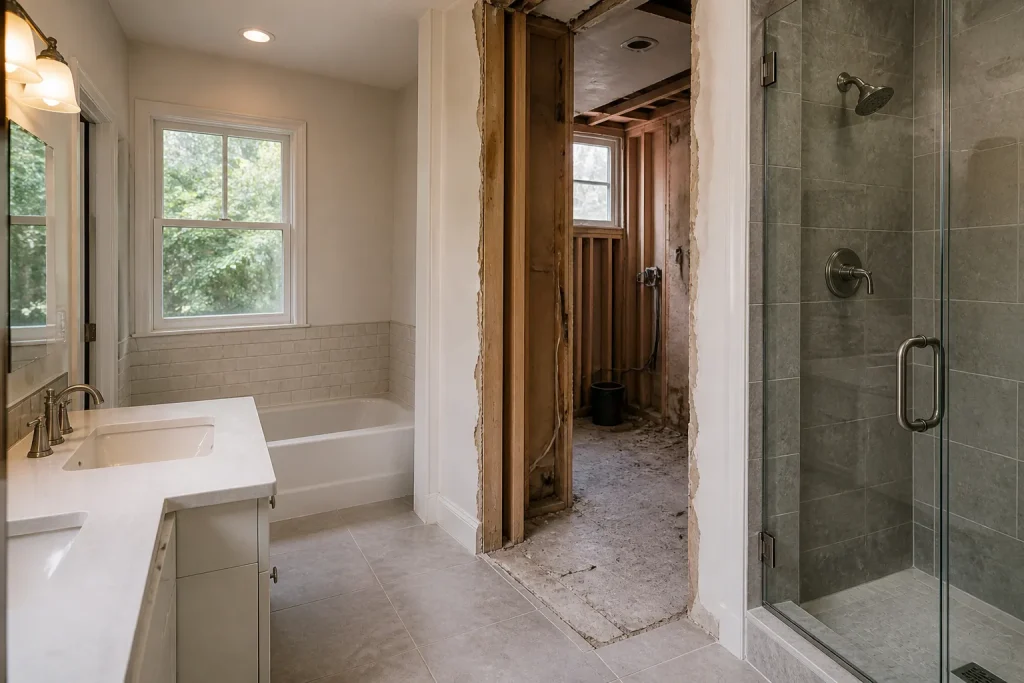
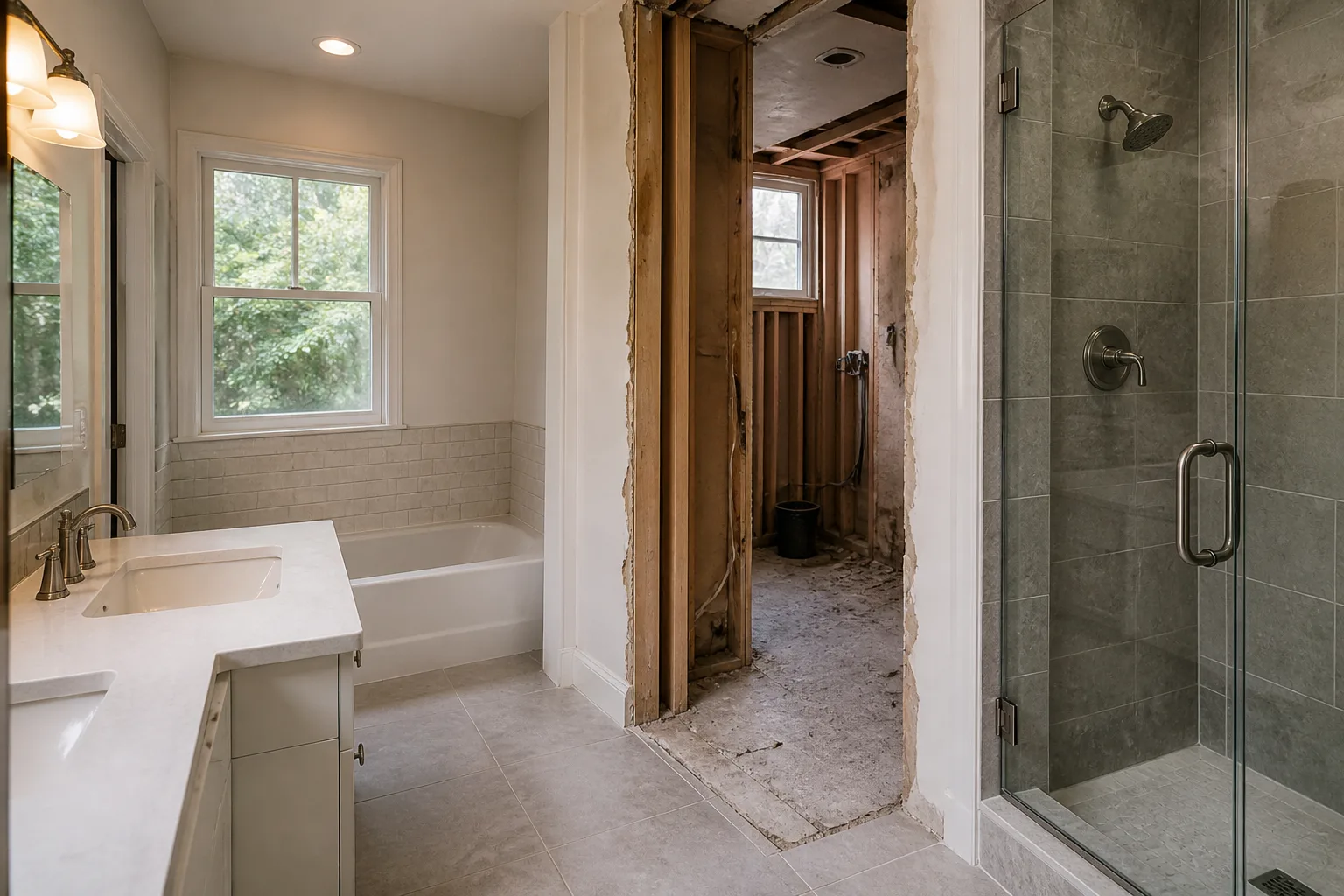
A fresh tile job over a wet, molding subfloor is one of the most expensive things a Glendale homeowner can do. Not because of what it costs now, but because of what it costs when that floor has to come back out in three years, this time with a remediation crew behind it. The repair-or-replace decision almost always comes down to one question most people never ask: what’s actually behind the tile? If the substrate and wall cavity are dry and sound, a targeted repair can be the smart money. If they’re not, you’re not choosing between repair and remodel, you’re choosing between remodeling now and remodeling twice.
If you’d rather have someone open a wall and look before you commit to a scope, call (844) 560-4526. Estimates are free, and we’ll tell you plainly which side of that line your bathroom is on.
What Should You Check Behind the Tile Before You Decide?
Moisture is the whole ballgame. Before anyone quotes you a repair or a remodel in Glendale, someone should be checking for water intrusion in the places it hides. Glendale’s older housing stock, much of it built between the 1920s and the 1960s, was finished with materials that don’t fail loudly. They fail quietly, then all at once.
Here’s what we look at, and what you can look at yourself:
- Grout lines: Hairline cracks are normal. Cracks that run in a pattern, or grout that crumbles when you press a thumbnail into it, usually mean movement or moisture beneath.
- Caulk joints: Caulk that pulls away from the tub or shower pan within a year of being redone is telling you the joint is moving. That’s a substrate problem, not a caulk problem.
- Flooring flex: Step on the tile near the toilet or tub. Any give, any hollow sound, any loose tile is a sign the subfloor has taken on water.
- Soft drywall at the base of the wall behind the toilet or beside the shower. Poke it gently. If your finger sinks in, stop and call someone.
- Staining or efflorescence (that white chalky crust) on the tile or at the baseboard, which points to moisture moving through the assembly.
A moisture meter and a look under the floor from the crawlspace or through the ceiling below settles it in about fifteen minutes. That fifteen minutes is the difference between a $600 repair and a $14,000 remodel you didn’t plan for.
When Is Re-Grouting and Re-Caulking Actually Enough?
Re-grout and re-caulk is legitimately sufficient when the moisture is at the surface and the assembly underneath is dry. That’s a real category, and it’s more common than contractors who sell full remodels will admit. We’ve re-grouted plenty of Glendale bathrooms and told the homeowner to call us in five years.
It’s the right call when:
- The grout is discolored or worn but the tile is firmly bonded and the substrate under it is dry.
- Caulk joints have failed from age, not from movement. Re-caulk and watch whether the new bead holds.
- There’s no soft flooring, no staining, and no musty smell that lingers after the exhaust fan has run.
- The drain and supply lines are sound and you’re not planning to open a wall anyway.
It’s cosmetic cover when the substrate is already failing. Fresh grout over a wet pan looks great for about eighteen months. Then the tile starts popping, the grout cracks along the same lines, and you’re back where you started, minus what you spent. If a contractor quotes you a re-grout without looking under the tile or asking about the floor below, that’s not a repair, that’s a delay with a receipt.
How Does Glendale Resale Change the Repair-vs.-Replace Math?
Glendale buyers and their inspectors are sharp about bathrooms. It’s one of the first places a home inspection report goes, and the findings show up in the negotiation. The conditions that get flagged most often here:
- Failed caulk and grout at the tub and shower, flagged as a moisture concern even when it’s minor.
- Missing or non-functioning exhaust fans. California requires proper ventilation in bathrooms, and an inspector will note a fan that vents into the attic instead of outside. That’s a moisture problem with a code citation attached.
- Water staining on ceilings below the bathroom, which sends a buyer’s imagination straight to a full gut.
- Original fixtures and tile from a mid-century build, which reads as “deferred maintenance” to a buyer even when it’s just dated.
- Signs of past leaks around the toilet flange or shower valve that were never properly repaired.
Here’s the math. A $700 repair that clears the inspection findings is money well spent. A $700 repair that hides a wet substrate just moves the problem to the buyer’s inspector, who will find it, and then you’re negotiating from a weaker position than if you’d fixed it properly. If you’re selling within a couple of years, get the substrate checked before you decide. That’s the honest answer we give Glendale homeowners who ask.
Does Plumbing Age Push You Toward Replace?
Often, yes, and this is the part most repair-or-replace conversations skip. If you’re already opening a wall for water damage, the plumbing behind it becomes part of the decision, because you will not want to open that wall again.
In Glendale homes built before roughly 1975, we regularly find cast iron drain lines and galvanized steel supply lines. Galvanized supply lines rust from the inside out. By the time you see the discolored water or the pressure drop at the showerhead, the pipe is largely choked. Cast iron drain lines scale and eventually crack, and a slow drain that a snake won’t fix is often the first symptom. If the wall is open anyway, replacing that section is far cheaper than replacing it later through a finished wall. We’re not going to tell you to replumb a whole house over one repair. But if the cast iron under the bathroom is already showing its age, addressing it while the tile is off is the kind of decision that saves five figures down the road.
This is also where a bigger picture helps. If you’re weighing a bathroom refresh against a larger project, it’s worth seeing how we handle structural work on Home Additions & ADU in Glendale, because the same inspect-before-you-scope discipline applies whether we’re opening a bathroom wall or a load-bearing one.
How We Scope a Bathroom: Base Scope Plus Contingency
Every bathroom estimate we write separates two things: the base scope and the contingency allowances for what might be behind the walls. That’s deliberate, and it’s the single biggest reason our customers don’t get surprise invoices at the end.
Base scope covers what we can see and price with confidence: demo, tile, fixtures, vanity, paint, the labor and materials we know we need. Contingency allowances cover what we can’t see until the tile is off: the condition of the subfloor, the shower pan, the studs, the plumbing. We spell out those allowances in writing before we start, so if we open the wall and find rot, you’re looking at a line item that was already on the page, not a phone call that ruins your week.
Our position on that is simple. An allowance that isn’t on paper is a surprise waiting for a date. Every price change arrives as a written change order before any work moves forward.
Permits get pulled and inspections signed on every eligible job. The permit inspector works for you, not for us, and that’s exactly why we like him. If your last contractor told you permits were optional for a bathroom remodel in Glendale, that’s a conversation worth having before you sign anything else.
When Should You Call a Pro Instead of Handling It Yourself?
Call a pro the moment you find soft flooring, a persistent musty smell, water staining below the bathroom, or any give in the tile underfoot. Those are signs the problem is already behind the finish, and no amount of surface work fixes that. Re-caulking and re-grouting a sound bathroom is a reasonable weekend job. Chasing a moisture problem into a wall cavity or under a shower pan is not.
We’ve got up to 28 years of experience on our crews, we pull permits and pass inspections, and every completed job is backed by our written 90-Day Done Right Promise. One call brings us back if something’s not right.
While you’re planning, it also helps to have the exterior of the house squared away. A failing roof or old windows let water in from the top down, and we’ve seen more than one “bathroom leak” that traced back to a roof flashing issue. Our Barrett & Sons Construction Glendale home page covers how we handle those exterior projects, and if a driveway or fence is part of your plans, Driveway & Pavers in Glendale and Fence Installation in Glendale lay out what those look like.
Key Takeaways
- The repair-vs.-replace decision hinges on what’s behind the tile, not what’s on it.
- Re-grout and re-caulk is legitimate when the substrate is dry; it’s a delay when it isn’t.
- Glendale buyers and inspectors flag moisture, missing exhaust ventilation, and prior leaks first, and that changes the resale math.
- If a wall is open, address aging cast iron and galvanized plumbing while you’re in there.
- A written estimate that separates base scope from contingency allowances is the only way to avoid a surprise invoice.
The Bottom Line
If the substrate is dry and the plumbing is sound, repair the bathroom and save your money for something else. If the substrate is wet or the plumbing is at the end of its life, repair is a temporary patch over a problem that will come back, and the honest move is to scope a remodel in Glendale with contingency allowances written down before anyone picks up a hammer. If you’re in Glendale and need help figuring out which side of that line you’re on, Barrett & Sons Construction Glendale offers free estimates. Call (844) 560-4526 and we’ll take a look.
Frequently Asked Questions
A targeted repair like re-grouting, re-caulking, or replacing a shower valve typically runs a few hundred to a low four figures. A full bathroom remodel in Glendale generally runs well into five figures depending on size, tile selection, and whether plumbing or subfloor work is needed. The only way to know which you need is to have someone check the substrate first. Call (844) 560-4526 for an exact quote; estimates are free.
No, not without your written approval. We separate the base scope from contingency allowances for what’s behind the walls, and every price change arrives as a written change order before any work happens. If we open the wall and find something the allowance doesn’t cover, you’ll see it on paper first. Call (844) 560-4526 to schedule your free estimate.
Yes. We pull permits and pass inspections on every eligible job. Bathroom remodels that involve plumbing, electrical, or structural changes generally require a permit, and the inspection protects you. If a previous contractor told you permits were optional, we’d be glad to look at what was done. Call (844) 560-4526 for a free second opinion on any written estimate.
A re-grout and re-caulk is a day or two. A full bathroom remodel typically takes a few weeks, and the schedule depends on material lead times and whether we find something behind the tile during demo. We’ll give you a realistic timeline in the written estimate, not a best-case number designed to win the bid. Call (844) 560-4526 and we’ll talk through your bathroom.
Written by the team at Barrett & Sons Construction Glendale.
Need Construction Help?
Call Barrett & Sons Construction Glendale - licensed & insured, here with fast after-hours help in Glendale.
(844) 560-4526