
Last updated November 17, 2026
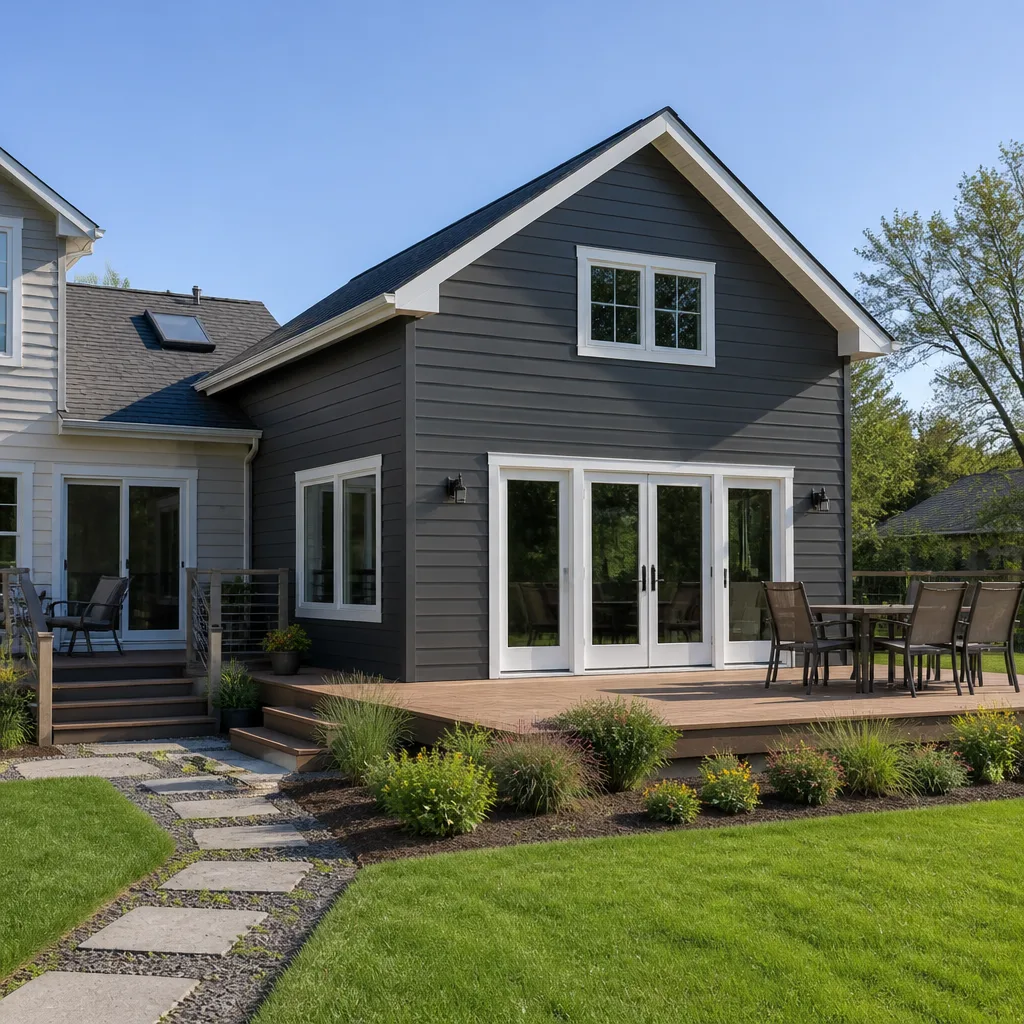 Home additions & ADU
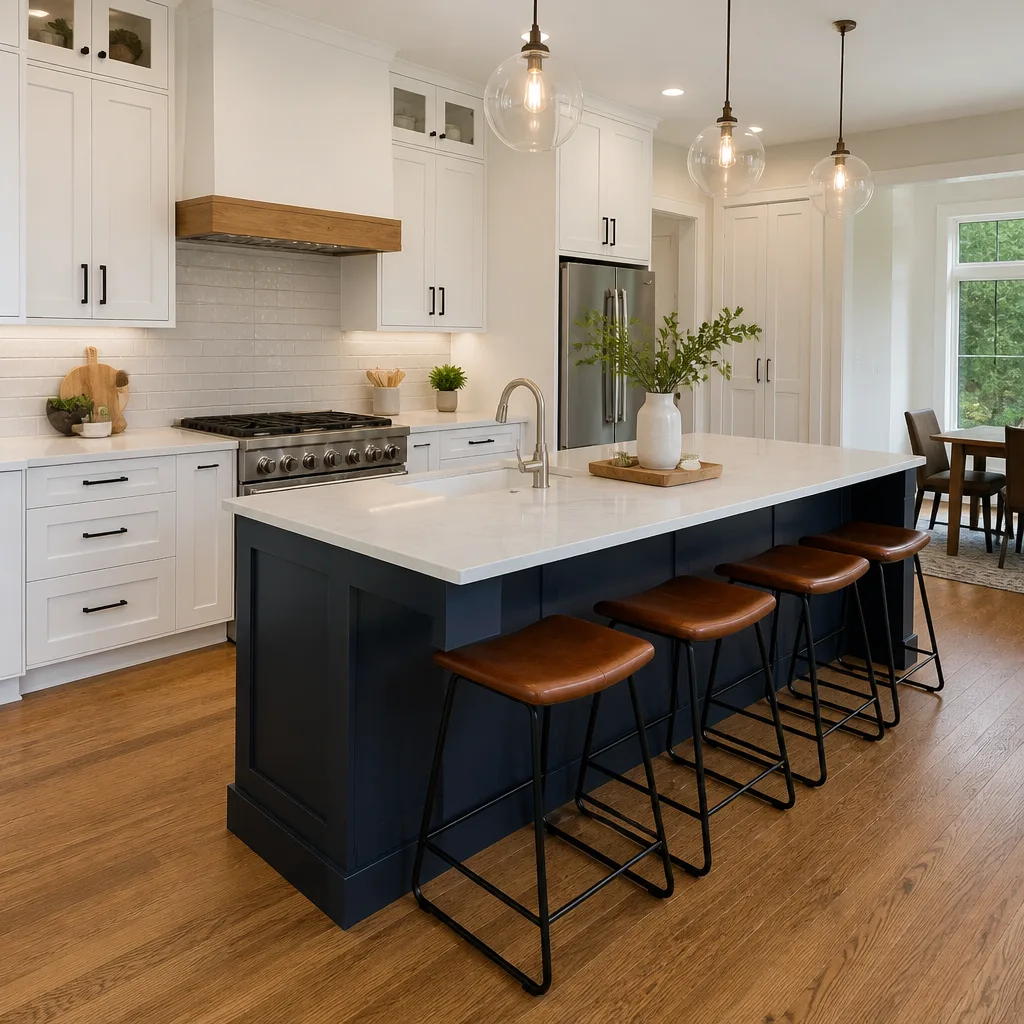 Kitchen remodeling
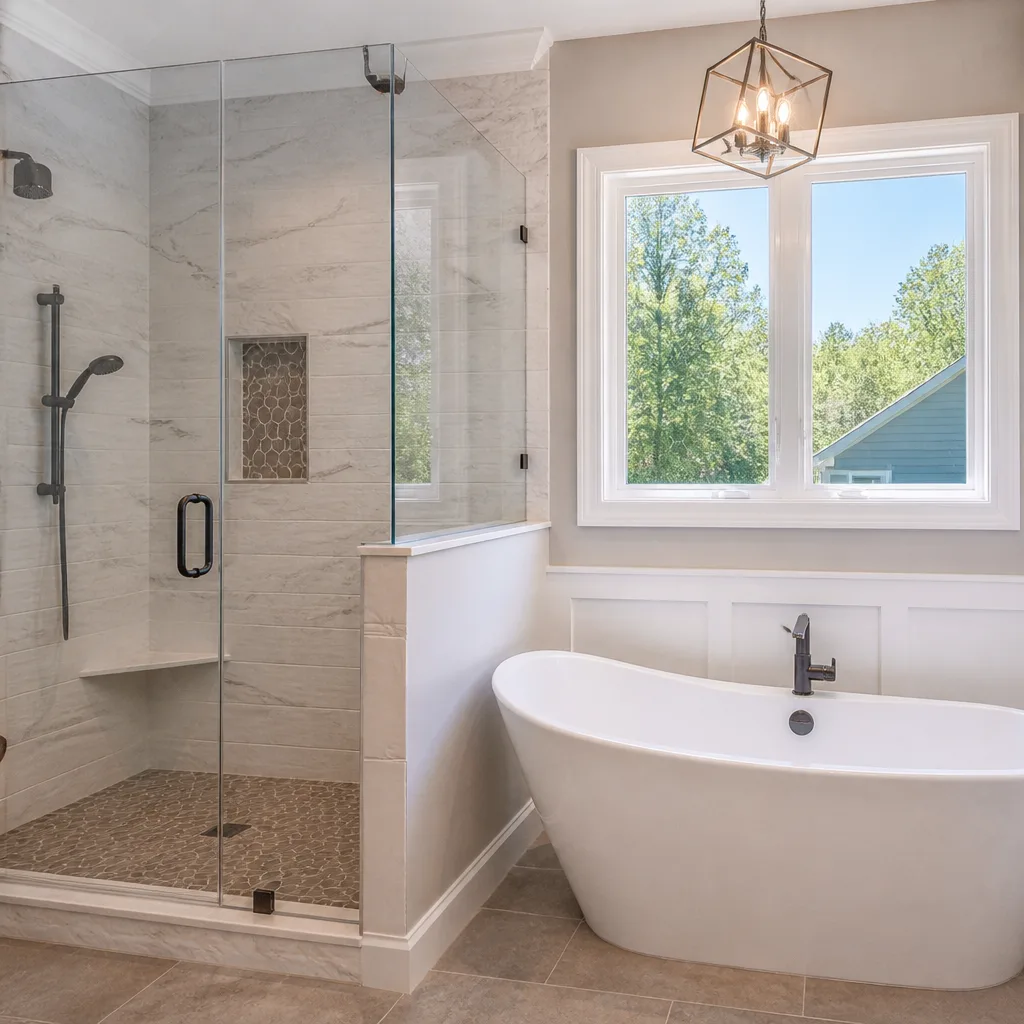 Bathroom remodeling
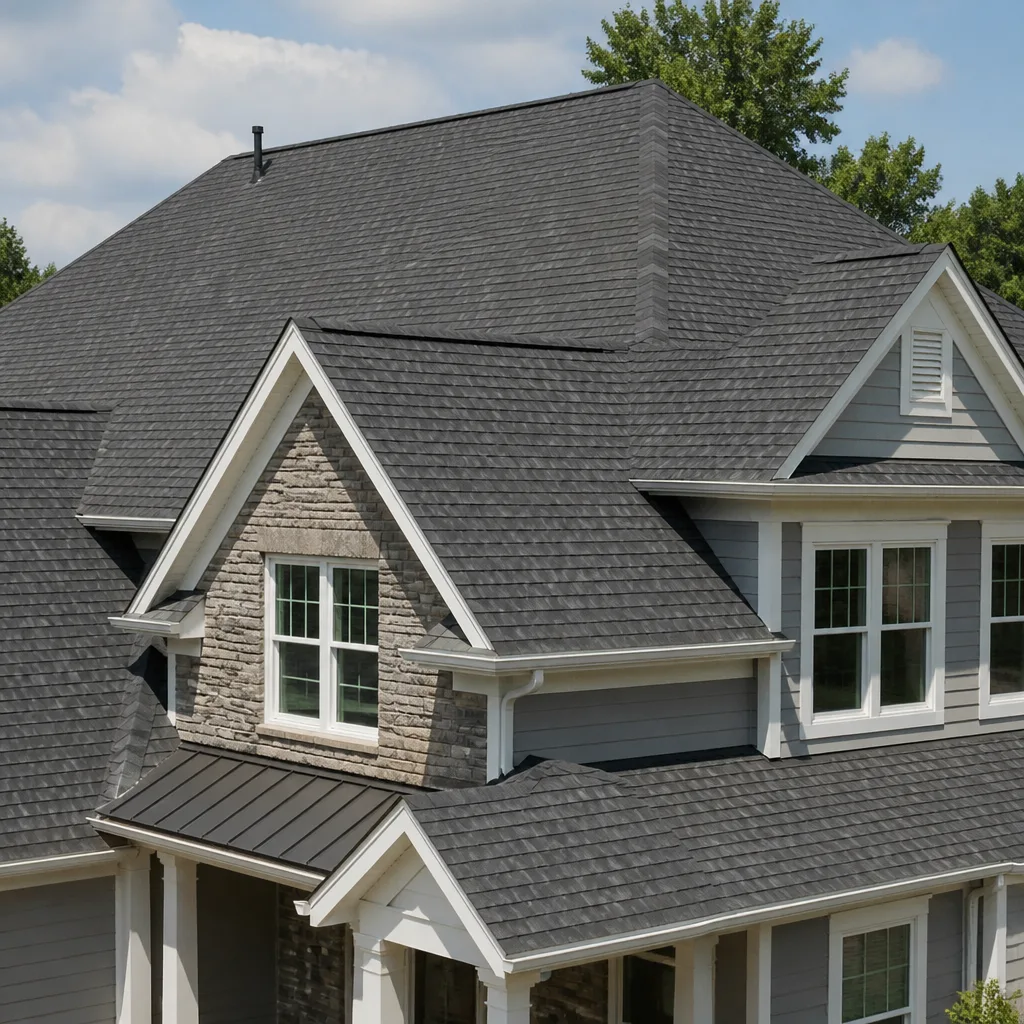 Roofing
 Windows & doors
 Driveway & pavers
 Fence
Free written scope consultation - allowances, timeline, and change-order rules on paper before a single trade is scheduled
Construction Cost Breakdown: The Glendale Homeowner’s Reference for 2026
Two bids for the same Glendale addition come in $18,000 apart, and the homeowner can’t tell whether one crew is cheaper or one bid is simply missing half the job. It’s usually the second thing. Permit fees, debris haul-off, hillside staging, and site protection can add up to $8,000 in legitimate cost that an aggressive bidder quietly leaves out. This guide walks through what actually drives construction costs in Glendale in 2026: the permit fee schedule, LA County labor burden, the hillside access premium, and where premium brands really land against builder-grade.
Quick Answer
Most Glendale construction projects in 2026 land in these ranges: kitchen remodels $28,000 to $85,000, bathroom remodels $16,000 to $48,000, asphalt shingle roof replacement $14,000 to $26,000 on a typical 1,800 square foot ranch, and home additions $240 to $410 per square foot depending on hillside access. The number matters less than what’s inside it. A bid you can audit line by line tells you the truth; a bid that’s a single lump sum tells you nothing until the invoice arrives.
Styles & brands we work with
- Kitchen remodeling
- Bathroom remodeling
- Home additions & ADU
- Roofing
- Windows & doors
- Driveway & pavers
- Fence
Table of Contents
- What does the Glendale permit fee schedule look like for 2026?
- How much does hillside access add to a Glendale project?
- Why do Glendale contractors charge more than Inland Empire crews?
- Builder-grade versus premium brands: what’s the real gap?
- How do you audit a construction bid line by line?
- What counts as a legitimate change order?
- Cost breakdowns by project type
- Common mistakes to avoid
What does the Glendale permit fee schedule look like for 2026?
Glendale permit fees are calculated on project valuation, not on square footage, and that valuation is the one your contractor declares on the application. Here’s the practical structure we work with across Glendale projects in 2026.
- Residential remodeling permit: roughly $380 to $1,650 depending on declared valuation, with valuation brackets every $1,000 above a base threshold.
- Structural additions and ADUs: $2,200 to $6,800 in permit and plan check fees on a typical 500 to 900 square foot addition, plus fire and utilities review.
- Roof replacement (overlay vs. tear-off): $220 to $480 for a reroof permit; tear-off with new sheathing pulls higher.
- Fence permit: $95 to $210 for fences over six feet in height or on a property line.
- Electrical, plumbing, mechanical sub-permits: $110 to $340 each, often stacked on a single remodel.
- Plan check surcharges: 30% to 50% of the base permit fee for projects that require structural engineering or hillside review.
Two things catch Glendale homeowners off guard. First, hillside properties often trigger geotechnical review, an extra $1,200 to $3,600 before you’ve bought a single board. Second, the declared valuation matters: if you lowball it and the inspector catches it, you’re re-pulling and paying a full second fee.
The permit inspector works for you, not for us – that’s why we like him. Every eligible Glendale job we run gets permits pulled and inspections signed, and that fee shows up as a line item on the written estimate, not as a surprise on the final invoice.
How much does hillside access add to a Glendale project?
Glendale’s hillside neighborhoods – Chevy Chase Canyon, the Verdugo foothills above Glenoaks, the steep lots off Adams Hill – add 12% to 25% to the cost of the same scope of work done on a flat lot. This is the single biggest pricing variable competitors from the valley tend to ignore when they quote.
The reasons are physical, not upcharge:
- Staging: you can’t park a dumpster where there’s no curb. Staging on a two-lane hillside street means permits, traffic cones, and sometimes a neighbor’s driveway lease at $300 to $900 for the job.
- Hand-carry: when a pallet of shingles or a bathtub can’t reach the door in a wheelbarrow, it walks up on somebody’s shoulder. That’s hours of labor, not dollars of material.
- Crane and boom work: roof tear-offs on steep-pitch hillside homes typically need a boom lift at $1,200 to $2,600 per day, plus a traffic control crew.
- Drainage and retaining: any addition on a slope needs structural foundation work and drainage correction. That’s $8,000 to $22,000 in foundation alone on many Glendale hillside additions.
- Debris removal: hauling from a Canoga-style flat driveway runs $400. Hauling from a steep Glendale canyon lot with a shuttle truck runs $900 to $1,400.
If your bid came back suspiciously low, hillside access is the first place to look. A crew that quoted you flat-lot prices hasn’t walked your lot.
Why do Glendale contractors charge more than Inland Empire crews?
Labor burden is the phrase that explains the whole thing. It’s not the hourly wage a carpenter gets paid. It’s everything above the wage: payroll taxes, workers’ compensation insurance, general liability, health benefits where offered, and the paid time the crew spends on safety meetings, driving between jobs, and loading materials. In Los Angeles County, burden typically runs 40% to 60% on top of the base wage.
In Glendale specifically, base wages for skilled trades run higher than Inland Empire rates by 15% to 25% because of cost of living and competition for good crews. So when a Riverside-based roofing company quotes you 30% less than a Glendale crew, one of two things is true: they’re burdening their labor properly and absorbing the difference somehow, or they aren’t. The second one is far more common.
Here’s what proper burden pays for: if our crew member gets hurt on your roof, workers’ comp covers it without your homeowners insurance getting touched. If a ladder goes through your window, general liability covers it. If there’s no burden, there’s likely no coverage, and the liability lands on you.
When you’re comparing bids, ask each contractor what their labor burden covers. A Glendale crew that can answer the question in plain language is usually the one you want standing in your kitchen.
Builder-grade versus premium brands: what’s the real gap?
This is where the biggest margin hides, and where homeowners often get talked into the wrong tradeoff. The gap between builder-grade and premium materials is real, but it varies enormously by trade. Here’s the honest breakdown for common Glendale renovations in 2026.
Roofing
Builder-grade three-tab asphalt shingles run $2.90 to $4.20 per square foot installed. A premium architectural shingle like a GAF Timberline or CertainTeed Landmark system runs $5.20 to $7.40 per square foot. On an 1,800 square foot roof, that’s about $4,200 more for the premium system, but it’s a 30-year roof versus a 15-year one and it holds up better against Glendale’s intense summer sun and occasional Santa Ana wind events.
Windows
Builder-grade vinyl windows run $340 to $580 per opening. Andersen 400 Series or Marvin Elevate windows run $760 to $1,450 installed. On a 12-window Glendale ranch house, that’s $5,000 to $10,000 more. The premium windows deliver real thermal performance gains in a climate where summer afternoon sun on a west-facing wall can cost you 20% or more on your cooling bill – but they don’t pay back instantly. The honest question isn’t “which is cheaper,” it’s “how long are you staying.”
Kitchen finishes
Builder-grade stock cabinets and laminate counters run $6,500 to $12,000 for a 10×12 kitchen. Premium brands land much higher: Wellborn or KraftMaid cabinetry with a Cambria or Silestone quartz surface runs $18,000 to $38,000 for the same footprint, installed. That gap is real and it’s the single biggest line item in a kitchen remodel. The finishes drive the number.
Hardscape
Builder-grade concrete pavers run $8 to $13 per square foot. Belgard or Techo-Bloc premium pavers run $15 to $26 per square foot. On a 600 square foot Glendale driveway or patio, that’s a $4,000 to $8,000 difference for pavers that hold color and don’t chip under the same traffic load.
None of this is an argument for premium on every trade. It’s an argument for knowing which trade your money is best spent on. Ask us and we’ll tell you straight – usually, we recommend premium on the roof and the kitchen because both are structural to the house and both are things you’ll look at every day. The floor and the fence? Builder-grade is often plenty.
How do you audit a construction bid line by line?
A bid you can’t audit is a bid you shouldn’t sign. Here’s the process we walk through with every Glendale homeowner before they sign anything, ours or anyone else’s.
- Check that permit fees are a separate line. If permits are “included” but you can’t see the number, you can’t verify it was pulled. A traditional Glendale remodel permit alone can run $1,200 or more – if it’s buried in the labor line, ask why.
- Check for debris and dumpster line items. A hillside Glendale job needs $600 to $1,400 of debris removal. If it’s not there, that cost is arriving on a change order.
- Check allowances. Any line reading “lighting allowance $500” or “tile allowance $8/sq ft” is a placeholder. If you spend more, you get an upcharge. If you spend less, on most bids the contractor keeps the difference. Ask what happens in both directions.
- Check site protection. Floor covering, dust barriers, and daily cleanup should be spelled out. It runs 1% to 3% of the total project and it either shows up on the bid or it doesn’t happen.
- Check exclusions. Look for the section titled “Not included.” If there isn’t one, ask for it in writing. A bid without exclusions is hiding something.
- Check for the word “miscellaneous.” Any bid line reading “misc. $2,400” is a change order waiting for a date.
- Check the change order process. Every scope change, every allowance overrun, and every price adjustment should arrive as a written change order before the work happens. If your contractor doesn’t mention change orders on the bid, they don’t have a process.
An allowance that isn’t on paper is a surprise waiting for a date. When we write a Glendale estimate, every scope, every allowance, and every price change is in writing before a nail moves.
What counts as a legitimate change order?
A change order is a written document that adjusts the scope, price, or schedule on a signed contract. It’s legitimate when it’s issued before the work happens, it has a real reason behind it, and both sides sign it.
Legitimate change orders look like this: you decide mid-remodel to upgrade from a laminate counter to a Cambria quartz surface, and the change order says the difference is $3,400 with a specific product. Or the inspector finds knob-and-tube wiring behind the wall (common in older Glendale homes built before 1950), and the change order to rewire that section comes in at $1,850 before any of the work starts.
Illegitimate change orders look like this: an invoice at the end with $6,200 of “extra work” you never saw a document for. Or a verbal “we’re going to need another $2,000 for the framing, it’s worse than we thought” without a written document. That’s not a change order. That’s a bill you can’t question.
Ask any contractor you’re considering to describe their change order process before you sign. If they can’t clearly explain it, they don’t have one.
Cost breakdowns by project type
Here are the ranges we see on Glendale jobs in 2026. Every project is different, but these are honest starting points.
Kitchen remodel
- Cosmetic refresh (paint, hardware, refacing): $12,000 to $26,000
- Mid-range full remodel (new cabinets, counters, appliances): $38,000 to $62,000
- High-end remodel with premium cabinetry and quartz: $72,000 to $120,000
Bathroom remodel
- Cosmetic refresh: $6,500 to $14,000
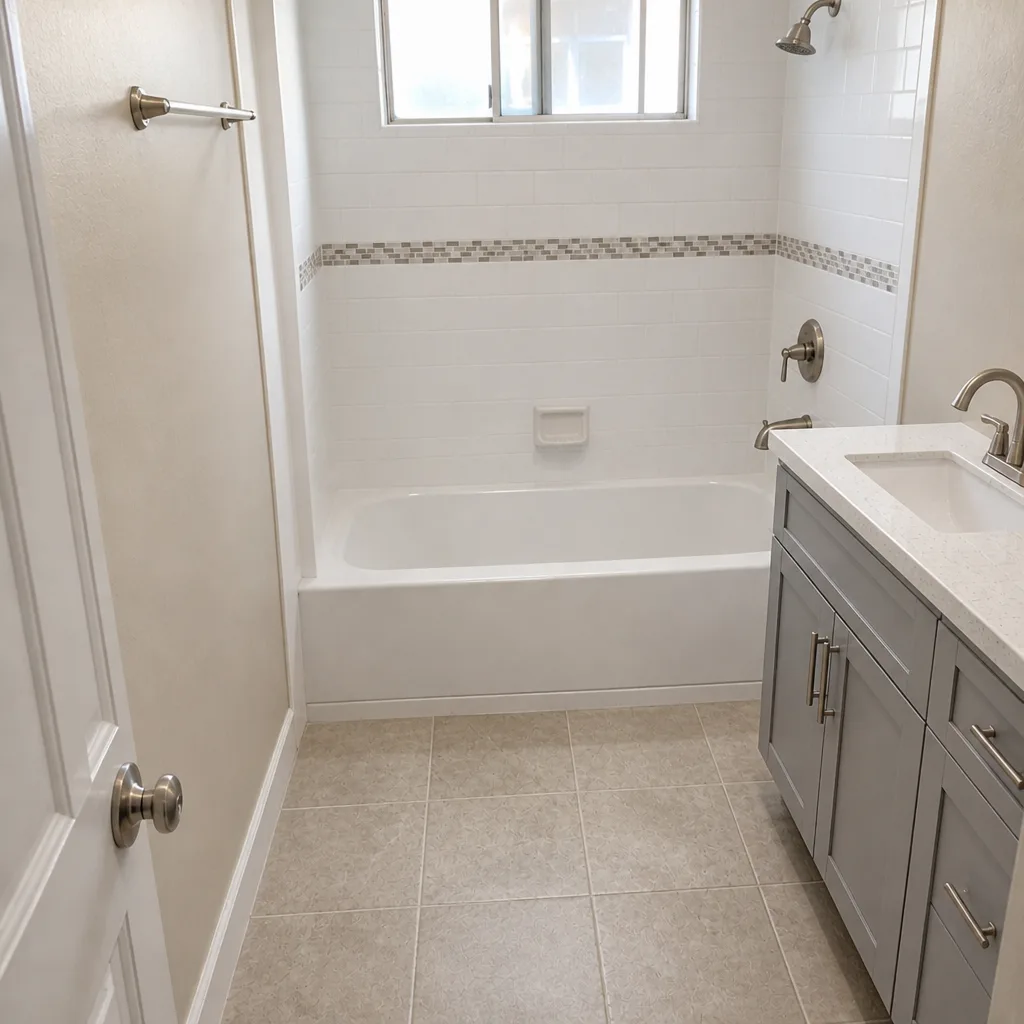
- Full remodel, tub-to-shower conversion: $18,000 to $34,000
- Premium finishes and layout change: $36,000 to $58,000
Roof replacement
- Builder-grade architectural shingle, flat-lot ranch: $14,000 to $21,000
- Premium GAF or CertainTeed system with new sheathing: $22,000 to $32,000
- Hillside installation with boom lift and tear-off: add $2,400 to $4,800
Home addition or ADU
- Flat-lot 500 square foot addition: $240 to $310 per square foot
- Hillside addition with structural foundation: $320 to $410 per square foot
- Converted garage ADU (plumbing, electrical, permits): $95,000 to $175,000 total
Fence installation
- Pressure-treated wood with 6-foot height: $28 to $52 per linear foot
- Cedar or composite premium: $48 to $86 per linear foot
- Glendale permitted fence (over 6 feet or property line): add permit fee
Driveway and pavers
- Standard concrete driveway: $9 to $16 per square foot
- Belgard or Techo-Bloc paver driveway: $16 to $28 per square foot
- Hillside driveway with drainage correction: add 20% to 35%
If you want a closer look at what a paver job runs on a specific Glendale property, see our Driveway & Pavers in Glendale guide. For fence details by material and height, Fence Installation in Glendale walks through the same line items.
Common Mistakes to Avoid
- Choosing the lowest bid without reading it. The $18,000 gap between two Glendale estimates is almost always about what’s missing, not what’s cheap. Read what’s excluded before you read the price.
- Accepting “permits not needed” for a Glendale project. Almost every structural, electrical, plumbing, and roof project in Glendale needs a permit. If your contractor says otherwise, they’re protecting their schedule, not your standing with the city.
- Signing an allowance-heavy bid. Ten allowances with vague dollar amounts means the final bill is a negotiation at best and a hostage situation at worst. Make them concrete numbers on the front end.
- Ignoring hillside access on the site walk. If the contractor doesn’t measure the slope, ask about the staging plan. If they can’t answer, they haven’t done hillside work in Glendale.
- Skipping the debris and dumpster line. A missing debris line at $1,200 is going to show up as a change order at the end. It always does.
- Not asking for the labor burden proof. Ask to see a certificate of insurance before the crew shows up. A Glendale contractor with real burden can produce it in an hour.
- Believing the verbal “we’ll take care of it.” If it’s not on paper with a signature, it didn’t happen. The change order you didn’t sign is the invoice you can’t refuse.
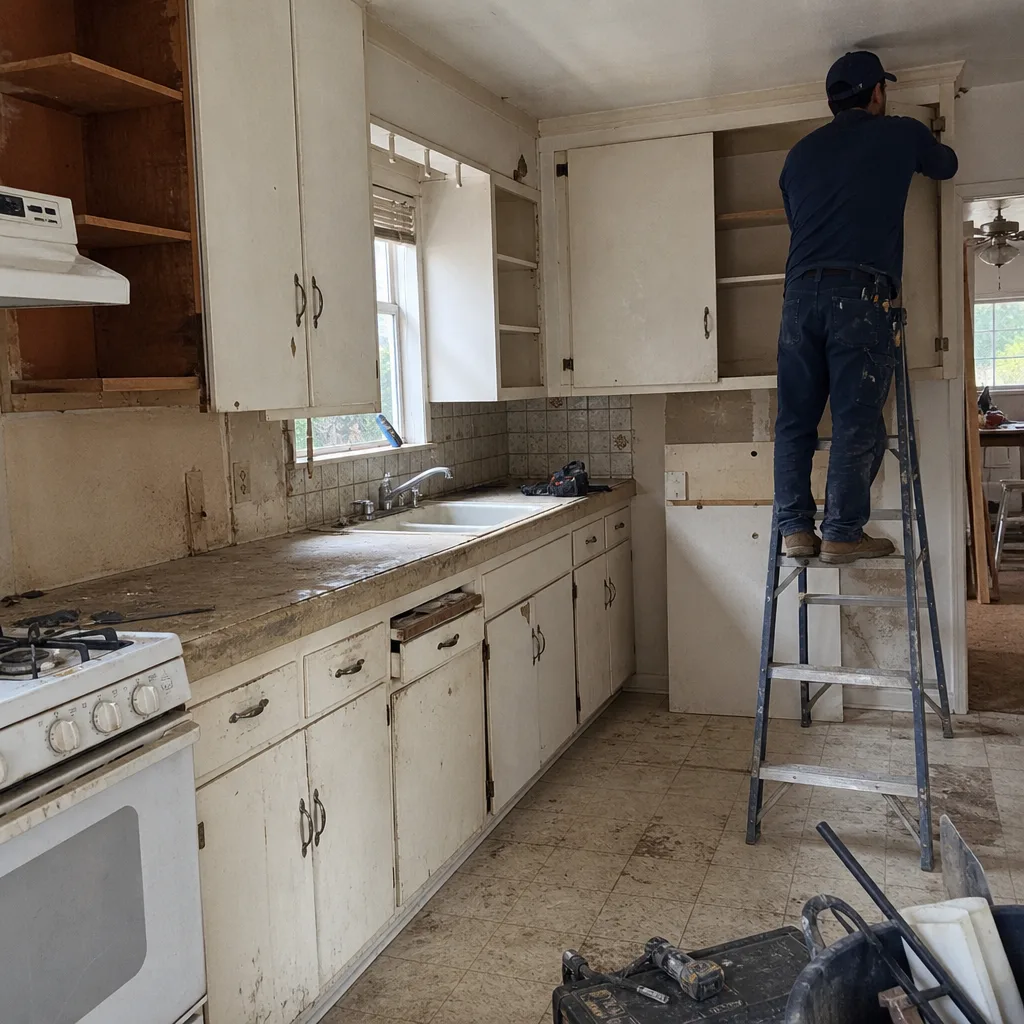
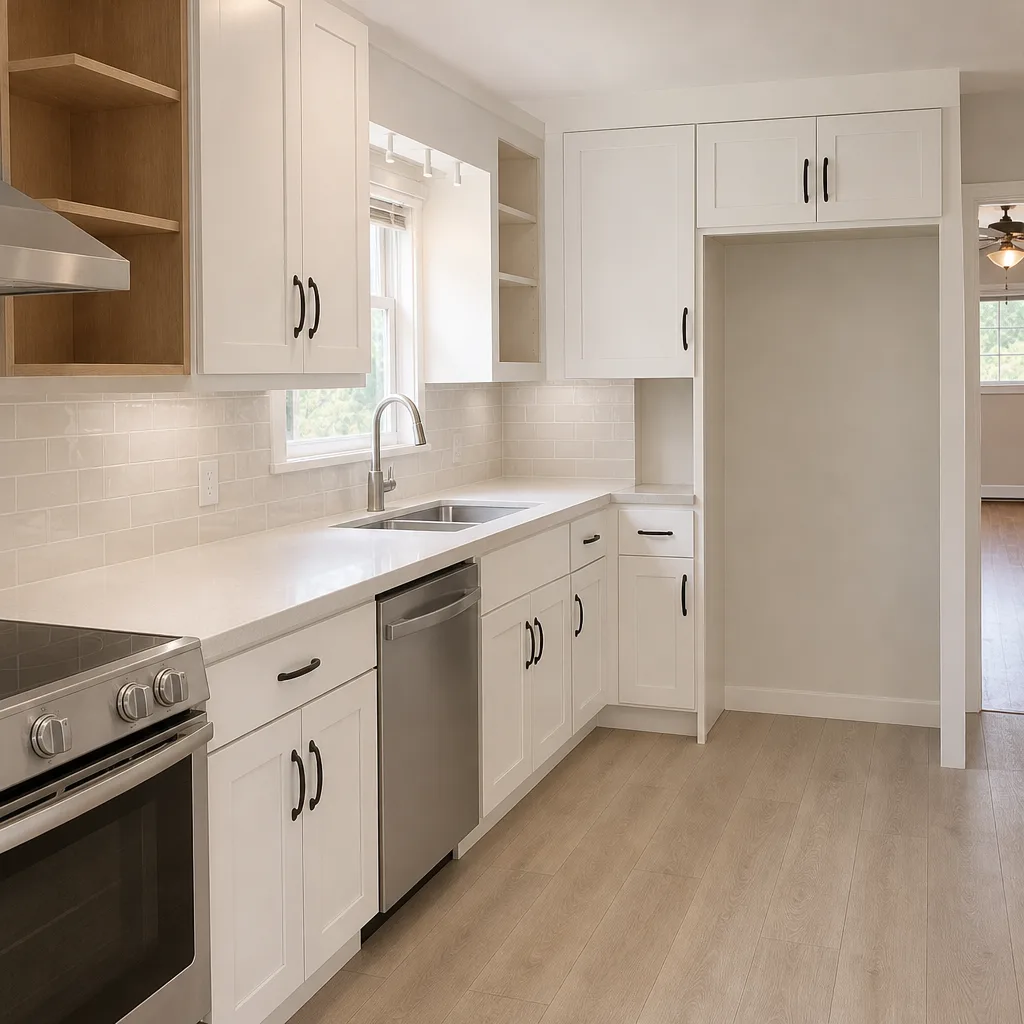
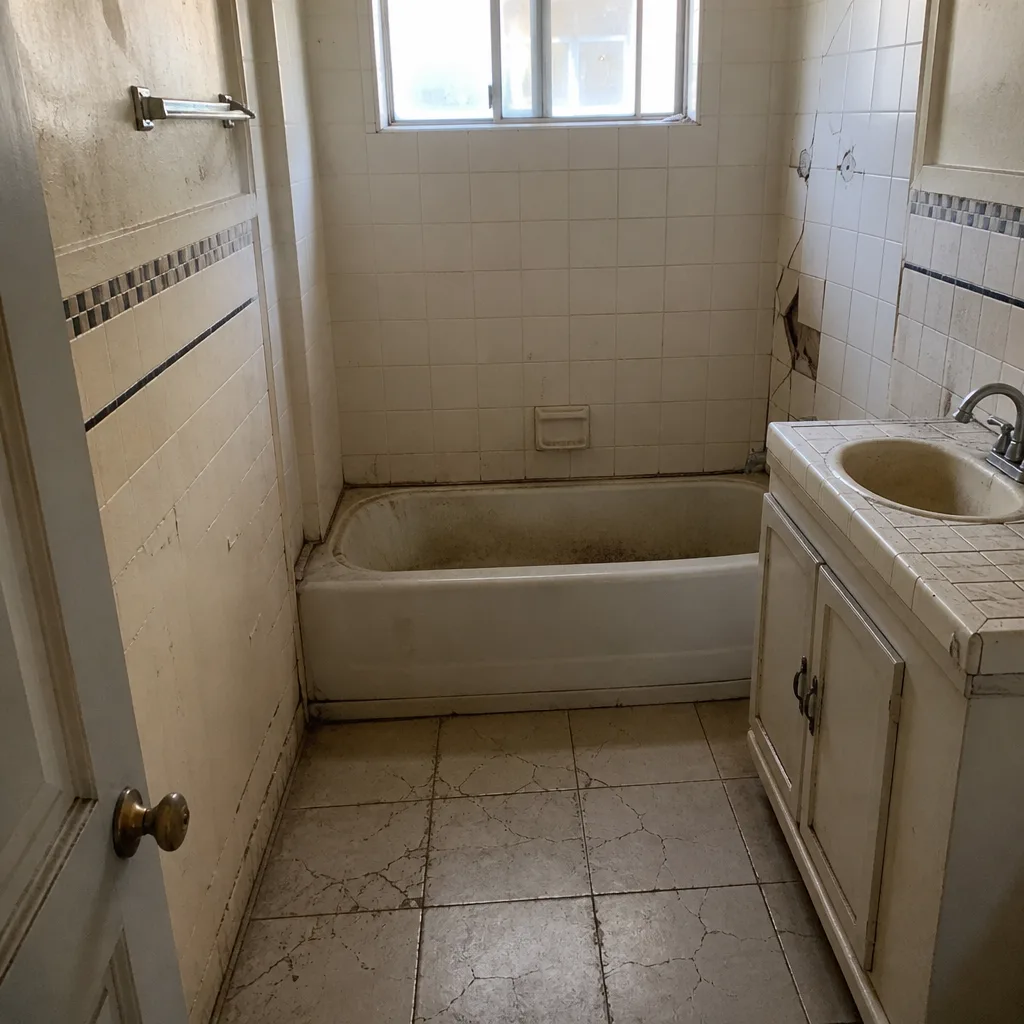
See the difference
 Before
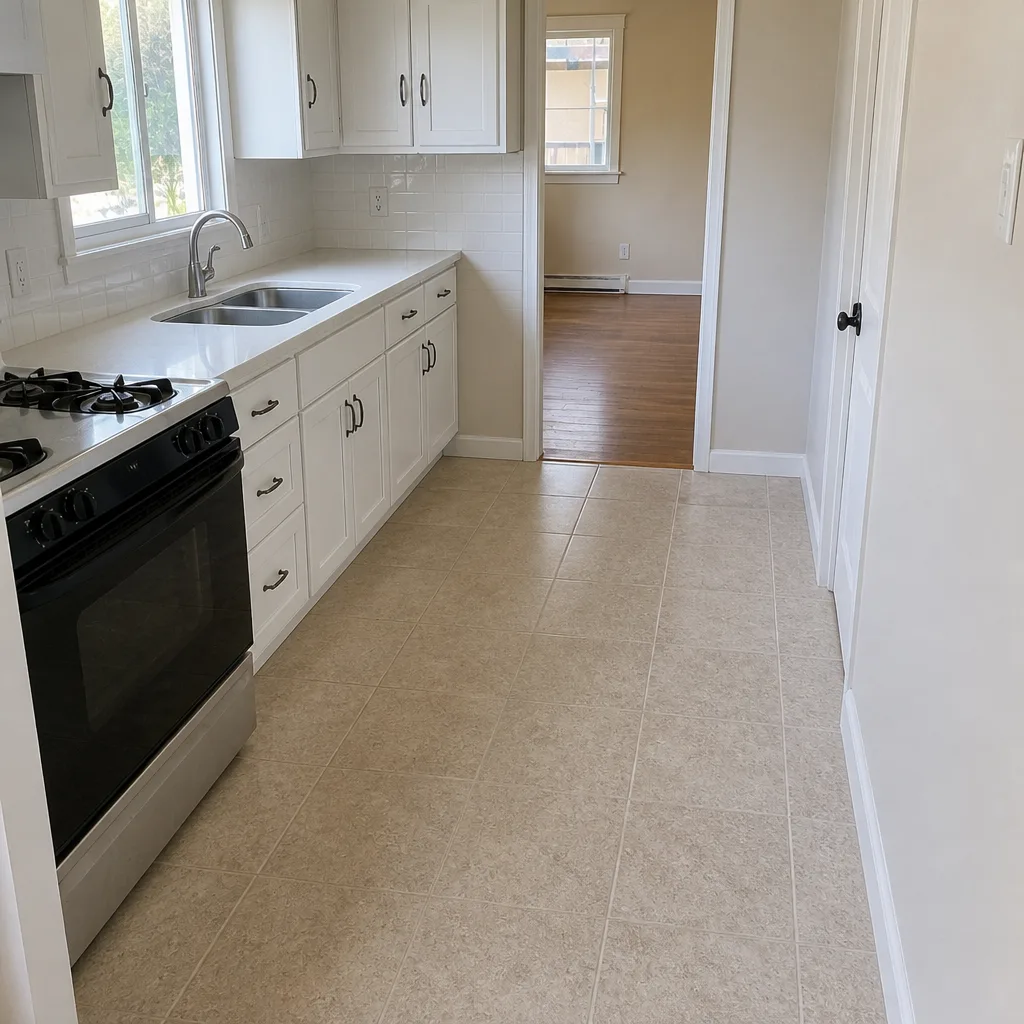 After
 Before
 After
 Before
 After
When to Call a Professional
Call a professional the moment the scope of your Glendale project touches anything structural, electrical, plumbing, or roofing. Roof work at height is genuinely dangerous – falls are the number one cause of construction deaths in the trades, and no homeowner should be on a 6/12 pitch to save a few hundred dollars. Electrical panel work, gas line modifications, and load-bearing wall changes belong to licensed trades, full stop.
You should also call when you’re staring at two bids you can’t compare, or a bid with numbers that don’t add up. A professional can read the bid with you and tell you what’s missing.
Barrett & Sons Construction Glendale offers free estimates in Glendale – call (844) 560-4526. Every eligible job carries a written 90-Day Done Right Promise, every scope and price change arrives as a written change order before work happens, and every permit gets pulled and inspections signed. We also offer a free second opinion on any written estimate you’ve already received, plus $40 off any repair over $200, no trip charge inside the county, and a permanent 10% senior and veteran discount.
Frequently Asked Questions
A mid-range full kitchen remodel in Glendale runs $38,000 to $62,000 in 2026, with cosmetic refreshes starting around $12,000 and premium finishes with Wellborn or KraftMaid cabinetry and Cambria quartz reaching $72,000 and above. The gap between tiers comes almost entirely from cabinetry and countertops, not labor. Call (844) 560-4526 for an exact quote on your Glendale kitchen – the estimate is free.
A Glendale fence permit is required for any fence over six feet tall or anything on a property line, and the fee runs $95 to $210. Most front-yard fences also have height limits under city code that vary by neighborhood. Pulling the permit protects you when you sell the house or if a neighbor disputes the fence line. If you’re planning a fence, our Fence Installation in Glendale page walks through the permit process and materials, or call (844) 560-4526.
The price only changes if the scope changes, and when it does, you get a written change order before the work happens. That’s the standard we hold ourselves to: no surprise invoices at the end. If a contractor can’t describe their change order process in plain language before you sign, expect a different answer when the bill arrives. Call (844) 560-4526 if you’d like a free second opinion on a bid you’ve already received.
A hillside home addition in Glendale typically runs 6 to 10 months from permit to final inspection, compared to 4 to 6 months on a flat lot. The extra time comes from geotechnical review, structural foundation work, and the slower pace of staging and material delivery on steep access. Plan for the schedule variance up front rather than absorbing it as a schedule change three months in. Call (844) 560-4526 to schedule a free site walk and confirmed timeline.
Labor burden in Los Angeles County runs 40% to 60% on top of base wages when you include workers’ comp, general liability, and payroll taxes – so a Glendale bid that looks 20% higher may simply be burdening labor properly. A bid that doesn’t show burden is often a bid that isn’t carrying insurance, which puts the liability on you. Ask for a certificate of insurance before the crew shows up. Call (844) 560-4526 for a transparent Glendale bid with the burden accounted for.
A written estimate tells you the exact price for a specific scope. An allowance is a placeholder – “tile allowance $8 per square foot” – and the final cost depends on what you actually pick. Every allowance should have a stated number in the bid, with a stated policy for what happens if you go over or under. An allowance that isn’t on paper is a surprise waiting for a date. Call (844) 560-4526 to see what a fully itemized Glendale estimate looks like.
The Bottom Line
The cost of a Glendale project in 2026 is not one number – it’s the sum of permits and plan check, LA County labor burden, hillside access premiums, material tier choices, and the change orders that either show up on the bid or on the invoice six weeks later. The homeowners who come out ahead are the ones who can read a bid. Ask what’s included and what’s excluded, verify permits are a separate line, demand specific allowance numbers, and refuse any “miscellaneous” charge. The lowest bid is often the most expensive project – the highest bid with a written scope is usually the same project with less drama. If you value a name you can verify and a crew whose sons will be on your job site, we’re the local choice. Visit the Barrett & Sons Construction Glendale home page to see how we run every project, then call (844) 560-4526 for your free estimate.
Written by the team at Barrett & Sons Construction Glendale.