
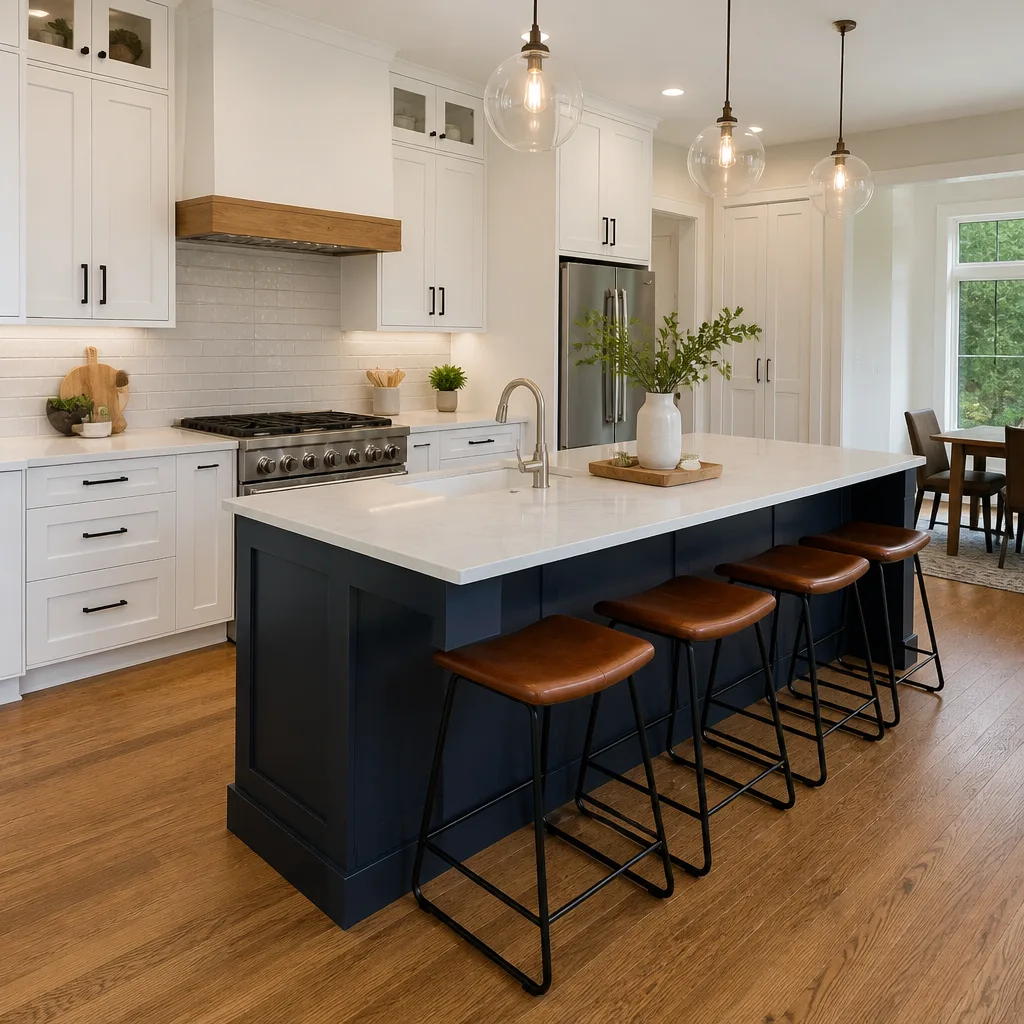
 Kitchen remodeling
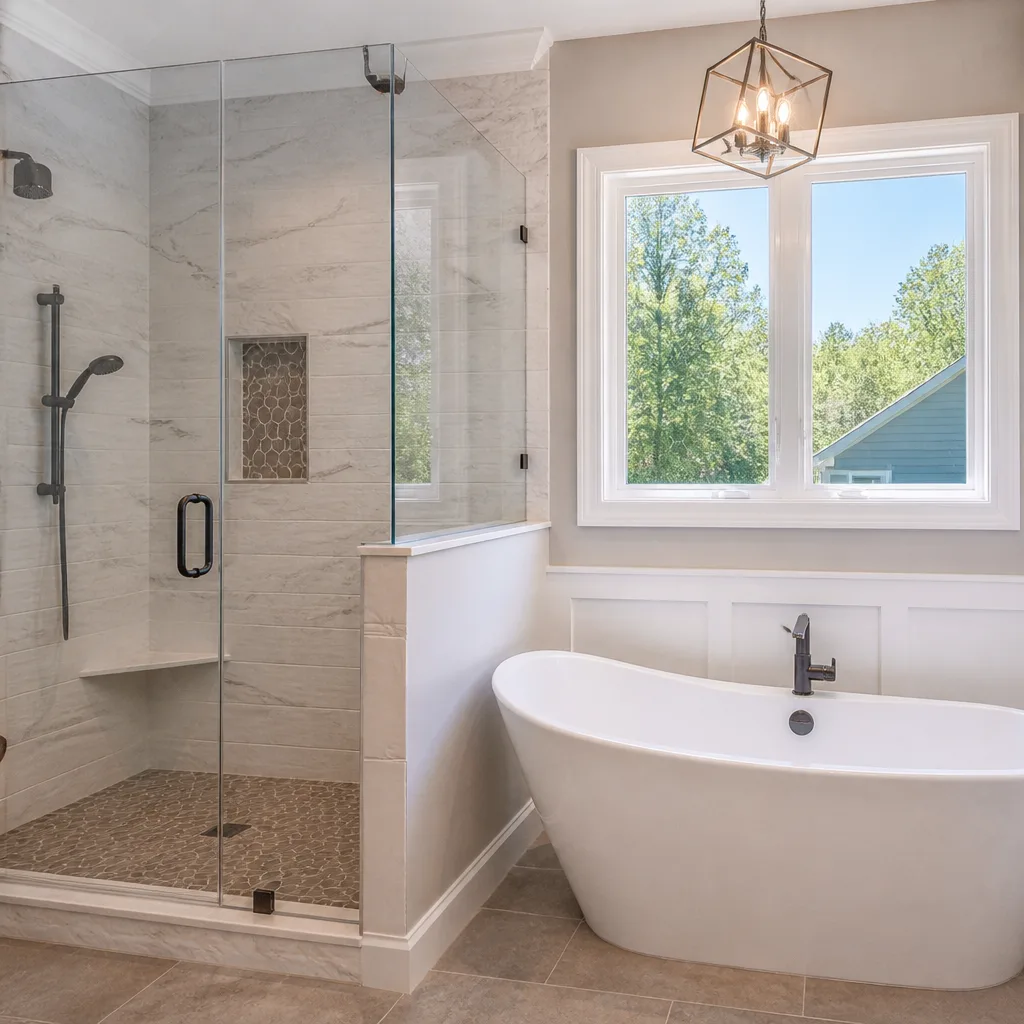 Bathroom remodeling
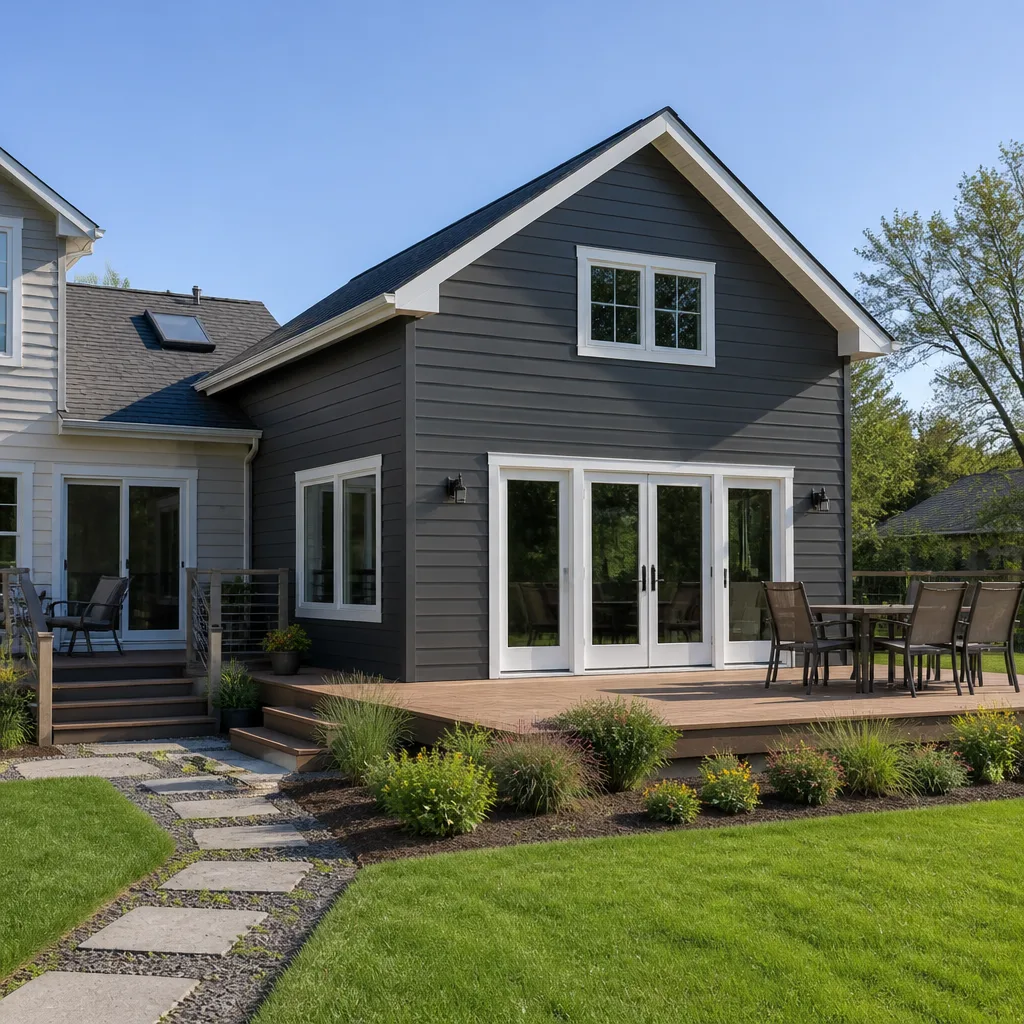 Home additions & ADU
 Roofing
 Windows & doors
 Driveway & pavers
 Fence
Free written scope consultation - allowances, timeline, and change-order rules on paper before a single trade is scheduled
Quikrete Kitchen Remodeling: The Glendale Owner’s Guide
This page covers concrete and masonry work inside a kitchen remodel in Glendale: patching floors, leveling a slab before cabinets go down, repairing a worn hearth or a damaged mud-set base. We handle that work, and a kitchen remodel in Glendale typically runs $14,000 to $45,000 all-in, depending on cabinet line, countertop material, and how much concrete or masonry repair the floor turns up. One thing up front: Barrett & Sons Construction is an independent remodeling company, not affiliated with Quikrete. We buy and install Quikrete products the same way you would, and we’ve pulled enough failed floors apart in Glendale to know where these products hold and where they don’t.
Most owners don’t go looking for concrete work. They find it. A cabinet installer sets a level on the old floor and the bubble won’t settle. A tile pops loose two winters after a remodel because the substrate under it was never sound. Or a homeowner pulls up old vinyl in a 1950s Glendale bungalow and finds cracked, uneven slab underneath where the new island was supposed to go.
Which Quikrete Products This Applies To
We’re talking about a few specific products that come up in kitchens: Quikrete Concrete Mix (the 80 lb. bag most homeowners recognize) for patching and small pours, Quikrete Sand/Topping Mix for thin leveling coats, Quikrete Vinyl Concrete Patcher for feathering out cracks and spalls, and Quikrete Anchoring Cement for setting anchor bolts and post bases. Each one has a different job and a different depth limit, and using the wrong one is where most homeowner repairs go wrong. Topping mix, for example, isn’t meant to be built up thick; pour it deep and it shrinks and cracks.
The label on the bag is your compatibility sheet. Check the product name, the yield in cubic feet, and the minimum and maximum application depth printed on the back. That depth range is the number that matters most. If your floor needs 2 inches of build-up, an 80 lb. bag of standard mix will do it; a bag of patcher won’t. Measure before you buy, and measure twice.
On the OEM-versus-aftermarket question: there isn’t really one here. Quikrete is a commodity product sold at every hardware store in Glendale, and the bag you buy at the counter is the same material we’d buy. The difference between a repair that lasts and one that fails isn’t the brand. It’s surface prep, mixing ratio, curing time, and whether anyone checked for moisture under the slab first. Skip that last step and even a perfect pour will lift.
Styles & brands we work with
- Kitchen remodeling
- Bathroom remodeling
- Home additions & ADU
- Roofing
- Windows & doors
- Driveway & pavers
- Fence
Signs Your Quikrete Kitchen Floor or Masonry Work Is Failing
- Cracks spreading from a corner or doorway. Usually slab movement or a patch that was mixed too wet and shrank as it cured, pulling away from the surrounding concrete.
- A hollow sound when you tap the floor. That’s a sign the patch or topping coat has debonded. If tile sits on top of it, the tile is living on borrowed time.
- White powder or crust along a baseboard or floor seam. Efflorescence, which means moisture is moving through the concrete. It’s common in older Glendale homes where a slab has no vapor barrier under it.
- Cabinet bases sitting unlevel, or doors that won’t line up. A floor that was patched without checking flatness will telegraph right up through the cabinets. This is the one owners most often mistake for a cabinet problem.
- Cracked or crumbling hearth, step, or built-in surround. Masonry that was never sealed or that took too much heat cycling. In Glendale, a kitchen hearth facing south or west gets a lot of afternoon sun, and that temperature swing does real damage over time.
See the difference
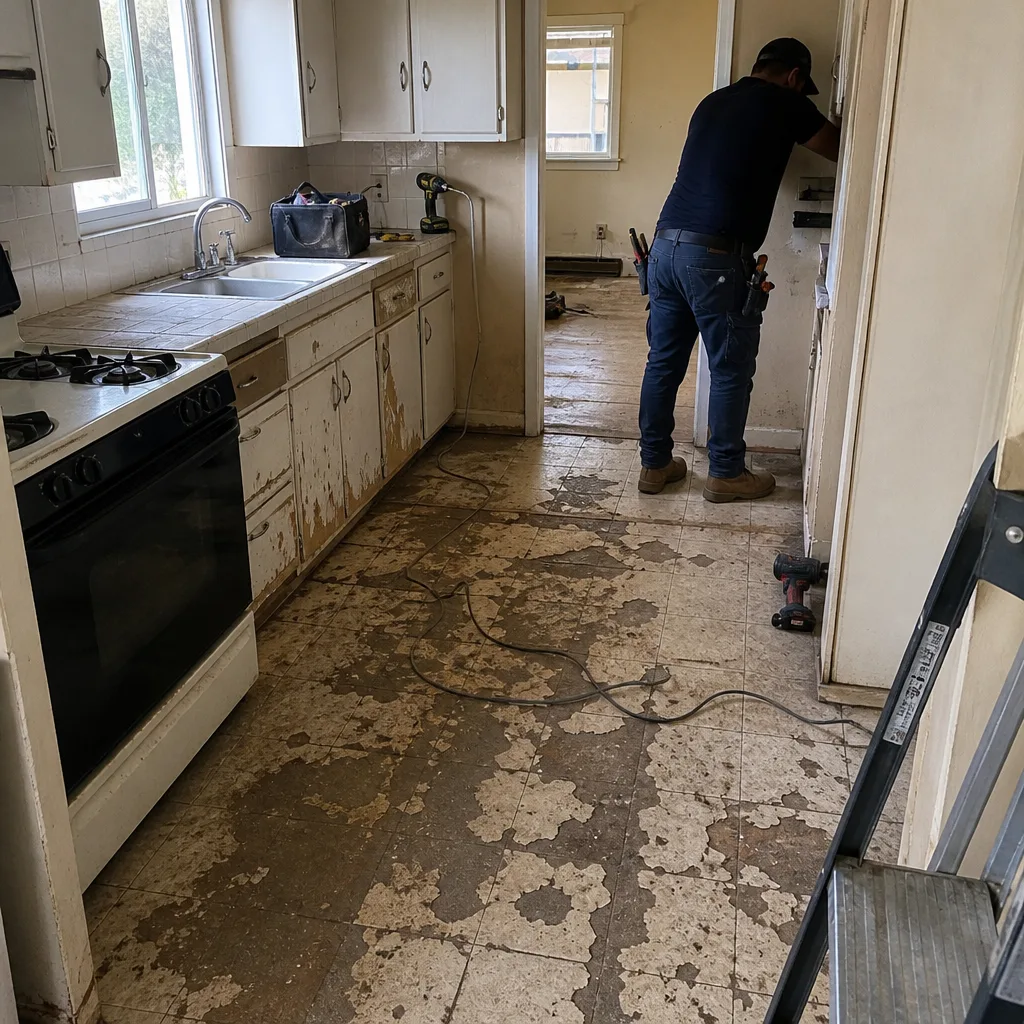 Before
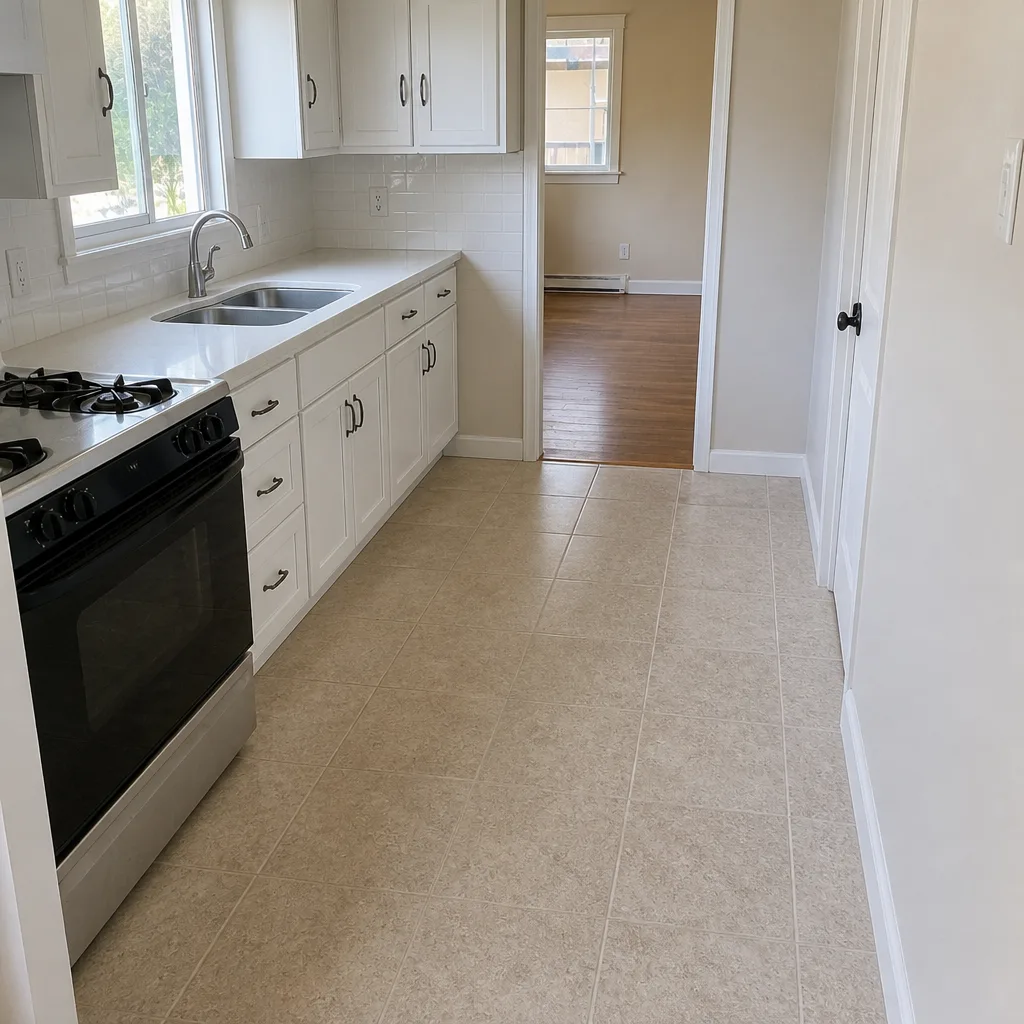 After
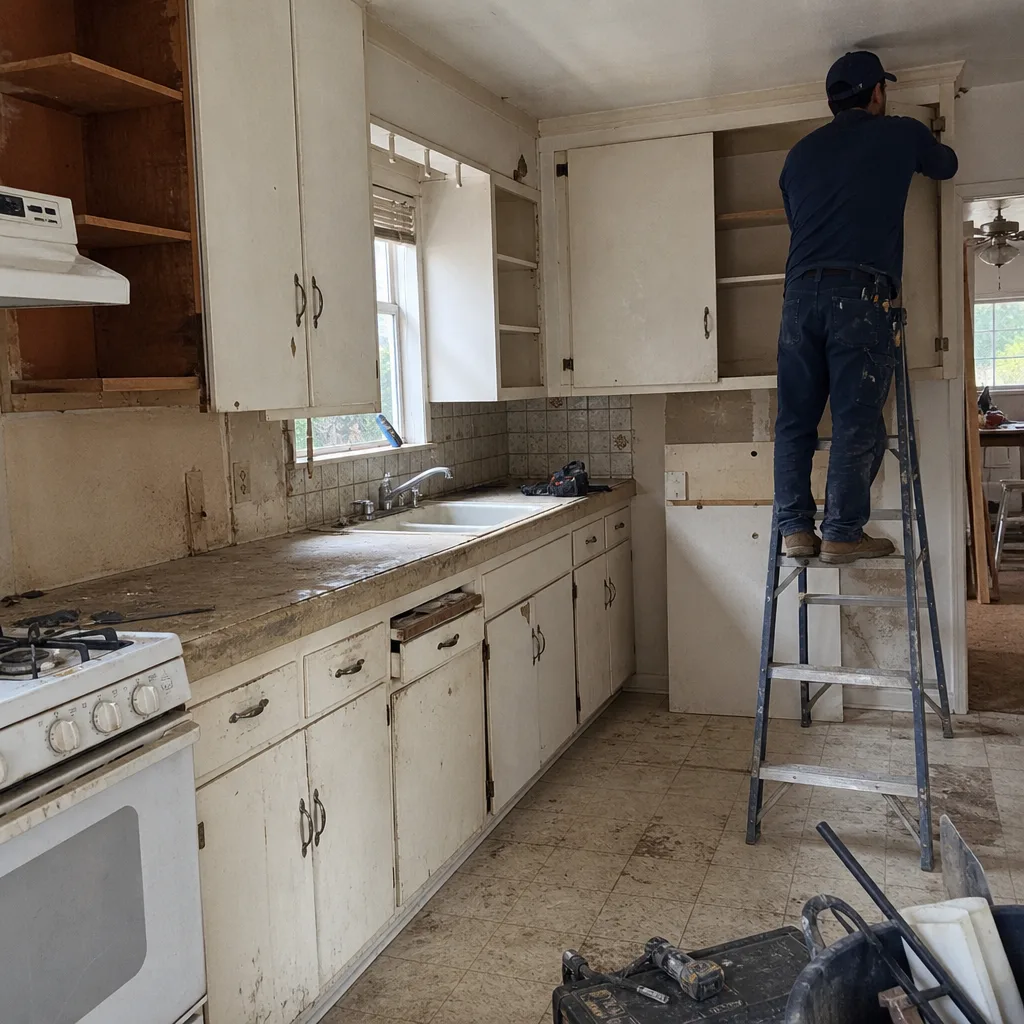 Before
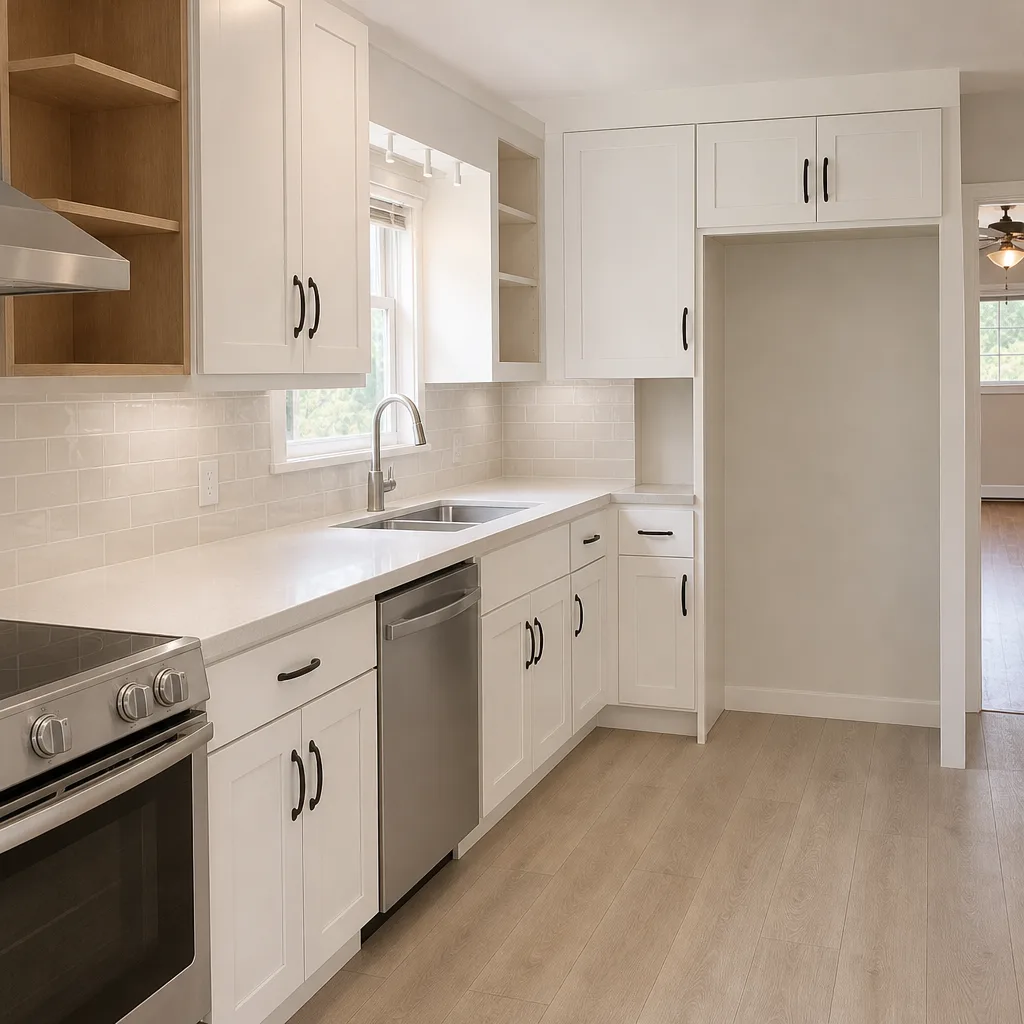 After
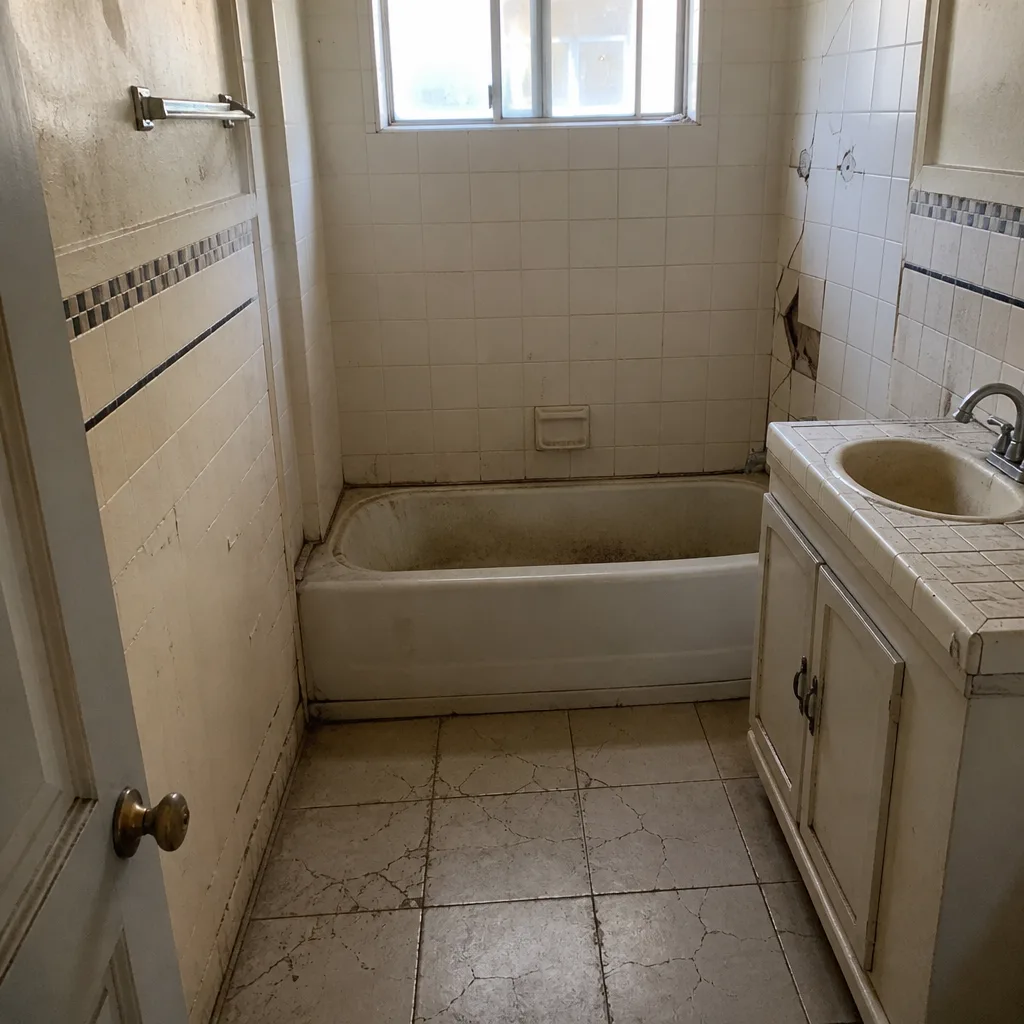 Before
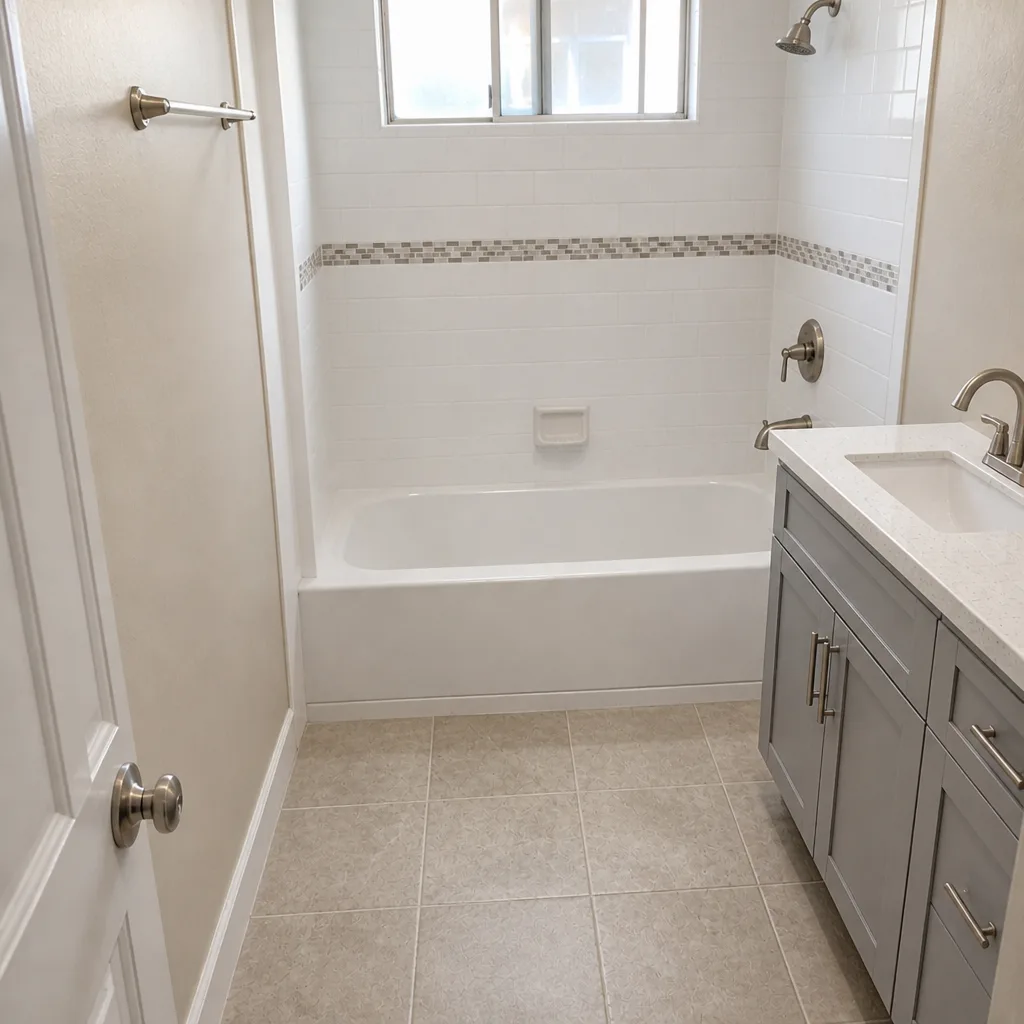 After
Quikrete Kitchen Remodeling Cost in Glendale & What’s Included
A full kitchen remodel in Glendale runs $14,000 to $45,000. Concrete and masonry repair is a line item inside that, not a separate project, and what it costs depends on square footage, depth of the pour, and whether old tile or vinyl has to come up first.
- Small kitchen remodel: $9,000 to $20,000
- Cabinet installation: $4,000 to $13,000
- Countertop installation: $2,000 to $6,500
- Backsplash installation: $800 to $2,500
- Kitchen island installation: $3,000 to $10,000
Every price we quote is written down line by line, with materials and labor spelled out. If we open a floor and find a slab problem nobody could see from above, that price change arrives as a written change order before anyone touches a nail. The work carries our 90-Day Done Right Promise on every construction and remodeling job. Call (844) 560-4526 for a free estimate, and we’ll look at your floor before we quote a cabinet.
DIY or Call Us?
Some of this you can check yourself. Tapping a floor for hollow spots, looking for cracks wider than a credit card, and checking for white mineral staining are all things a homeowner can do in an afternoon. If it’s just a hairline crack in a hidden corner, a tube of patcher and an honest weekend might be enough, and we’ll tell you that.
Where it goes sideways is the structural end. A slab that’s moving, a floor that needs a real leveling pour, or masonry around a heat source all need a trained eye. Doing it wrong doesn’t just look bad; a bad patch under new cabinets voids the flatness tolerance those cabinets were built to, and you’ll find out six months later when the doors stop closing. We’d rather look at it before you spend the money. Call (844) 560-4526 and get a second opinion before you start pulling up anything.
FAQs
Twenty to thirty years for a properly mixed, properly cured interior pour, and much shorter for a topping coat that wasn’t prepped. In Glendale, the bigger enemy is moisture from below, not weather. If you don’t know whether your slab has a vapor barrier, test for moisture before you pour anything, and if you’d rather have us check it, call (844) 560-4526 for a free estimate.
Often yes, if the failure is a debonded patch and the slab under it is sound. We grind out the loose material, treat the surface, and re-pour with the right product for the depth. If the slab itself is moving, a patch is just putting a bandage on a problem that comes back, and we’ll tell you that straight instead of selling you a repeat.
Usually one to three days for prep, pour, and enough cure time to walk on it, before cabinets go in. Full cure takes longer, and we schedule cabinet installation around that, not the other way around. The rest of the kitchen runs on its own timeline. Call (844) 560-4526 and we’ll give you a written schedule with your estimate.
We buy Quikrete from local suppliers and match the product to the application, not the other way around. We don’t stock parts on a truck; the material arrives for your job, in the quantity your floor actually needs. We’re independent from Quikrete and we install KraftMaid and Cambria up top, so the whole kitchen gets the same written scope and the same 90-Day Done Right Promise. Call (844) 560-4526 to schedule your free estimate.
Written by the team at Barrett & Sons Construction Glendale, serving Glendale and nearby areas.