
Last updated November 17, 2026
 Home additions & ADU
 Kitchen remodeling
 Bathroom remodeling
 Roofing
 Windows & doors
 Driveway & pavers
 Fence
Free written scope consultation - allowances, timeline, and change-order rules on paper before a single trade is scheduled
Construction Warning Signs: A Glendale Homeowner’s Reference Guide
A door that starts sticking in December and frees itself by April isn’t a door problem. In Glendale’s expansive clay soils, that seasonal bind is often the first readable sign of foundation movement working under your house, and it can compound for years before it shows up as a crack on a wall. The obvious failures get all the attention – the leaking ceiling, the tilting fence, the settling patio. But the signals that actually save homeowners money appear six to eighteen months earlier, when intervention is still cheap.
This guide is about those early signals. What we’ve learned watching Glendale homes move, settle, and fail is filtered into the patterns below: how to read cracks by width and direction, what a binding window is telling you, and which combinations mean call someone now rather than next spring.
Quick Answer
The most reliable construction warning signs in a Glendale home are cracks wider than a nickel or wider than a quarter inch that grow over time, doors and windows that stick seasonally and don’t free up, gutter separation from the fascia, efflorescence (white powder) on retaining walls, and any crack that runs diagonally from a corner of a door or window frame. Hairline cracks in stucco under 1/16 inch are usually cosmetic. The pattern and the direction matter more than the crack itself.
Styles & brands we work with
- Kitchen remodeling
- Bathroom remodeling
- Home additions & ADU
- Roofing
- Windows & doors
- Driveway & pavers
- Fence
Table of Contents
- Reading Cracks: Cosmetic vs. Structural in Glendale Stucco
- What Seasonal Door and Window Binding Actually Signals
- Hillside Retaining Wall Failure: The Early Signs
- Roof and Gutter Signals That Predict Interior Leaks
- Glendale’s Clay Soils and Seasonal Movement
- Benign Settling vs. the Combinations That Need a Professional
- A Homeowner’s Seasonal Walkthrough Checklist
Reading Cracks: Cosmetic vs. Structural in Glendale Stucco
Glendale is a stucco town. Almost every house built before 1990 has a stucco skin, and stucco cracks if you look at it wrong. That’s the problem: stucco cracks are so common that homeowners learn to ignore all of them, including the ones that matter. Here’s how we tell them apart on a Glendale walkthrough.
Width is the first filter. A hairline crack under 1/16 inch (about the thickness of a credit card edge) is almost always cosmetic – it’s from stucco curing, thermal expansion, or minor seasonal movement. A crack you can slide a nickel into (about 3/16 inch) is the threshold where we start paying attention. A crack wider than a quarter inch is a real concern and worth a professional look regardless of anything else.
Pattern is the second filter. Cracks matter most when they form a shape:
- Vertical cracks in stucco alone are usually benign – stucco expands and contracts and hairline vertical cracks are normal.
- Diagonal cracks running from the corner of a door or window are the ones to watch. These usually trace the load path around the opening and can indicate differential settlement or framing movement.
- Stair-step cracks in masonry or block walls – literal stair-step pattern through the mortar joints – almost always mean movement in the foundation or footing under that wall.
- Cracks wider at one end than the other (tapered cracks) tell you the two sides are moving relative to each other. That’s active movement, not old settling.
Direction change over time is the third filter. A crack that hasn’t changed in five years is history. A crack you can slide a pencil into that wasn’t there last year is news. Mark both ends of any crack with a pencil and the date; check it every six months. If it’s growing, it moves from the “monitor” column to the “evaluate” column.
What Seasonal Door and Window Binding Actually Signals
A door that binds every December and frees itself in April is telling you about movement, not about the door. In Glendale’s climate, we get wet winters and very dry summers, and that cycle does two things under a house: it swells and shrinks the clay soil, and it expands and contracts the wood framing. When doors and windows bind on a seasonal rhythm, the house is moving with the seasons – which is normal in moderation. When a door binds and doesn’t free up, or starts binding on a rhythm it didn’t have before, the house is doing something new.
What we watch for:
- Seasonal bind that returns every year, worse each time. Slight worsening over two or three seasons is the pattern that usually traces to foundation edge settlement before any crack appears.
- Doors that won’t latch or that swing open on their own. This is a frame squareness issue. It can come from foundation movement under one corner or from a compromised header above the opening.
- Windows that stick on the same wall every time. If one window is stiff, that’s a window problem; if every window on one exterior wall is stiff, we start checking the wall above and the foundation below.
- New gaps at the top or bottom of doors and windows. Look at the reveal – the gap between the door slab and the frame. If that reveal is no longer even, the frame is out of square.
In Glendale homes we routinely see this pattern concentrated on the south and west walls, where the soil dries hardest in summer. If your front door is on a south-facing wall, it will show movement before your back door does. That’s not a coincidence, it’s a read.
Hillside Retaining Wall Failure: The Early Signs
Glendale has a lot of hillside lots with retaining walls, and a failing retaining wall almost never fails suddenly. It telegraphs. The reason a wall collapse surprises a homeowner is that they were watching for leaning and missed everything that happened before.
Efflorescence is the first tell. That white, powdery crust that appears on masonry and concrete walls is salt pushed out by water moving through the wall from the soil side. Efflorescence on the face of a retaining wall is a message: water is getting into the wall from behind, more than the drainage is handling. Drainage is the thing retaining walls fail on far more often than pressure.
Soil creep at the toe is the second tell. Look at where the wall meets grade on the downhill side. If soil is bulging out or accumulating at the base, the wall is rotating forward slightly and pushing dirt ahead of it. That is real movement and worth a close look.
Gap at the top and stair-step cracks are the third. A retaining wall that’s separated slightly from the structure behind it, or that has stair-step cracks in the block work, is showing you the same kind of message a foundation wall gives – movement in the footing.
We aren’t suggesting a homeowner redesign a retaining wall. We are suggesting you look at the base and the drainage every spring. If you see any combination of efflorescence, toe creep, and top-of-wall gap, get a professional evaluation before the next rainy season. In Glendale’s hillside neighborhoods, hillside drainage design and lot grading are a big share of the work we see – and catching it early is far less expensive than rebuilding a failed wall.
Roof and Gutter Signals That Predict Interior Leaks
Interior ceiling staining is the last warning sign, not the first. By the time a brown ring shows on your ceiling, the roof has been leaking under the shingles for a season or more. The signals that matter happen out on the roof and along the gutter line, one to two rainy seasons before you see any stain.
What we look for on Glendale roofs, especially on older homes in the Verdugo foothills:
- Granules in the gutter and downspout. A handful of granules after a rain is normal. A coffee-can’s worth each season means the shingles are shedding their protective surface, and that roof has a finite window left.
- Gutter separation from the fascia. A gutter that pulls away from the fascia board (even a quarter inch) is either holding too much water weight or has lost its fastening – both point to water sitting where it shouldn’t.
- Sagging gutter runs and standing water. Standing water in a gutter will back up into the fascia board, and that’s a hidden route for water to get behind the roof edge.
- Dark streaks or “freckles” on the shingles. These are usually algae, not leaks. But streaking over a large area plus granules in the gutter is a combination we flag.
- Daylight through the roof deck in the attic. Any point where sky is visible from inside the attic on a sunny day is a future leak point.
- Moss on Glendale roof surfaces. We see it more on shaded north-facing slopes. Moss holds moisture against the shingles and accelerates wear.
Roof age is the other data point. If you don’t know how old your roof is, look for the permit records with the city – a roof replacement that was permitted will have a paper trail. GAF and CertainTeed shingles installed on a permitted job generally have a manufacturer’s warranty life of 25 to 50 years depending on the product line, but that number only means something if the installation was done to spec with the right underlayment and flashing. In older Glendale homes, we frequently see unpermitted roof-overs of a prior layer, which shortens the real life of the assembly considerably.
Glendale’s Clay Soils and Seasonal Movement
Glendale’s foothill neighborhoods sit on a mix of expansive clay soils and, in the hills, decomposed granite and fill. Expansive clay is the part that moves. When it gets wet, it swells, sometimes by several inches across a yard. When it dries out, it shrinks back. A foundation sitting on that clay – especially a perimeter foundation on a pre-1980s home – moves with the clay, seasonally, for its whole life.
That seasonal movement is why Glendale homes have so many doors that bind and free themselves. It’s also why we’re cautious about blaming a crack on “settling” without evidence. Settling implies movement in one direction over time. In Glendale’s clay, we’re more often looking at cycling: movement in both directions, season after season, each cycle loosening slightly more.
A few Glendale-specific soil realities:
- Slope-side lots tend to drain water toward the downhill footings. Water concentrated on one side of a foundation does more damage than water spread evenly.
- Paved surfaces funnel water. When a driveway or patio was put in without adequate slope or drainage, runoff goes toward the house instead of away from it. If you’re planning new paving, we can talk about drainage design and slope before the pavers go down – see our work on Driveway & Pavers in Glendale.
- Downspout discharge matters more than most homeowners realize. A downspout that dumps water within two feet of a foundation puts concentrated water on the exact spot that moves most.
The fix for a lot of soil movement is boring and cheap: grade the soil away from the house, extend the downspouts, and keep water off the foundation. When that’s done early, we often see the seasonal bind in doors level out within a season or two.
Benign Settling vs. the Combinations That Need a Professional
Not every house signal is a call-the-contractor signal. Glendale has a lot of homes in the 50-to-90-year range, and they were all built on something, and they’ve all settled somewhat. Here’s a simple way to sort through the noise.
Usually benign:
- Hairline cracks in stucco under 1/16 inch
- A single vertical crack in an exterior wall that hasn’t changed in years
- Doors that bind in the wet season and free up each spring
- One stiff window on one wall
- Minor cracks in a driveway or patio slab with no vertical displacement between the slabs
Worth a professional evaluation:
- A crack wider than a nickel that’s growing
- Any diagonal crack from the corner of a door or window opening
- Stair-step cracks in brick or block work
- Doors that won’t latch, swing open on their own, or start binding without freeing up
- Combinations: a seasonal-bind door PLUS a new stucco crack on the same wall PLUS a new gap at a window frame
- Efflorescence or soil creep at the toe of a retaining wall
- Granules in the gutter at coffee-can volume, or daylight visible through the roof deck
The most useful heuristic we can give you: one sign is a fact, two signs together are a pattern, and three signs together are a call. A single sticking door might just be a door. A sticking door, a new diagonal crack from the front window corner, and an efflorescence patch on the wall below is a pattern that warrants a professional look, and it’s the kind of thing worth catching now rather than after the wall opens.
A Homeowner’s Seasonal Walkthrough Checklist
A 20-minute walkthrough twice a year will catch most of what this guide describes. Here’s the order we’d walk it in:
- Spring, right after the wet season: Walk the exterior. Note every crack with a pencil mark at both ends and the date. Look at the roof and gutters – granules, gutter separation, sagging, streaking.
- Spring, inside: Check every door and window. Try the reveal gaps (door-slab-to-frame). Note which openings bind. Note any attic condensation or new ceiling rings.
- Spring, retaining walls: Look at the toe of every retaining wall. Photograph anything that looks wet, crusty, or piled.
- Fall, before the rains: Recheck the crack marks. Recheck door and window binding. Look at the drainage at the foundation line – soil grade, downspout discharge.
- Fall, roof: Look at the shingle surface and any visible valleys from the ground with binoculars, or from a window at a low risk angle. Do not walk the roof – that’s a professional’s job, and the fall risk is real.
- Anytime: If three signs from the “professional evaluation” list show up on the same wall or the same house within the same season, that’s your call.
We recommend keeping the pencil marks through at least two full seasons. Two data points make a trend; one makes an anecdote.
Common Mistakes to Avoid
- Assuming all stucco cracks are cosmetic. Most are. But the pattern matters, and diagonal cracks from door and window corners are the ones that get missed because they look like every other stucco crack.
- Filling a crack before documenting it. Patching a stucco crack is fine, but take a dated photo and a measurement first. Filling it locks you out of knowing whether it was active.
- Blaming movement on “settling” without evidence. In Glendale’s expansive clay, movement is often cycling, not settling. The fix is very different depending on which it is.
- Ignoring efflorescence on a retaining wall. White powder on a retaining wall is the wall’s drainage failing, in plain sight. It’s the cheapest thing to catch early, and the most expensive thing to miss.
- Waiting for a ceiling stain before calling about roof signals. By the time you see a ceiling ring, water has been getting in for a season or two, and the repair scope is larger.
- Hiring a contractor who won’t pull permits on foundation work. In Glendale, structural repair work should be permitted and inspected. A company that says permits aren’t needed for the work is telling you something about the rest of the job.
- Using a top-down “how bad is it” judgment from a photo. Photos hide width and direction. A real read on a crack takes a measurement, a pencil mark, and a second look next season.
See the difference
 Before
 After
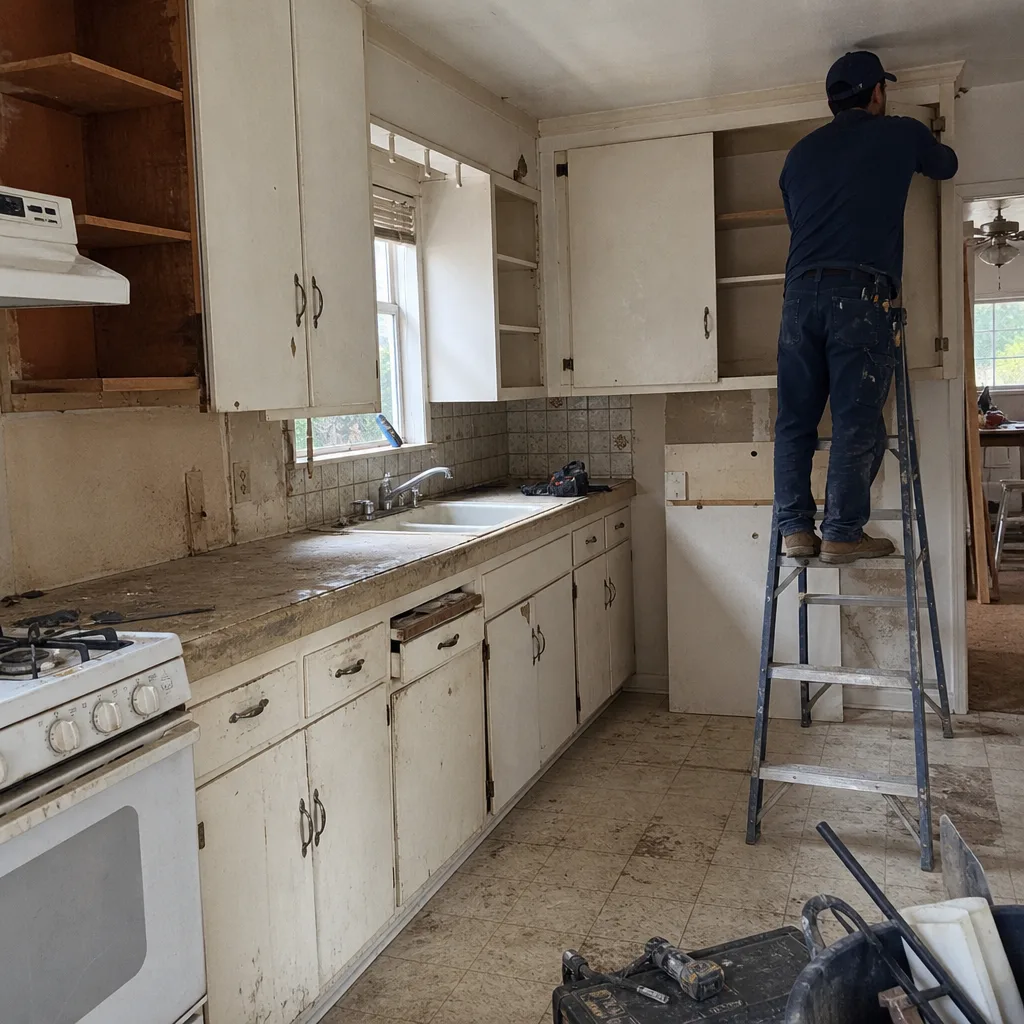 Before
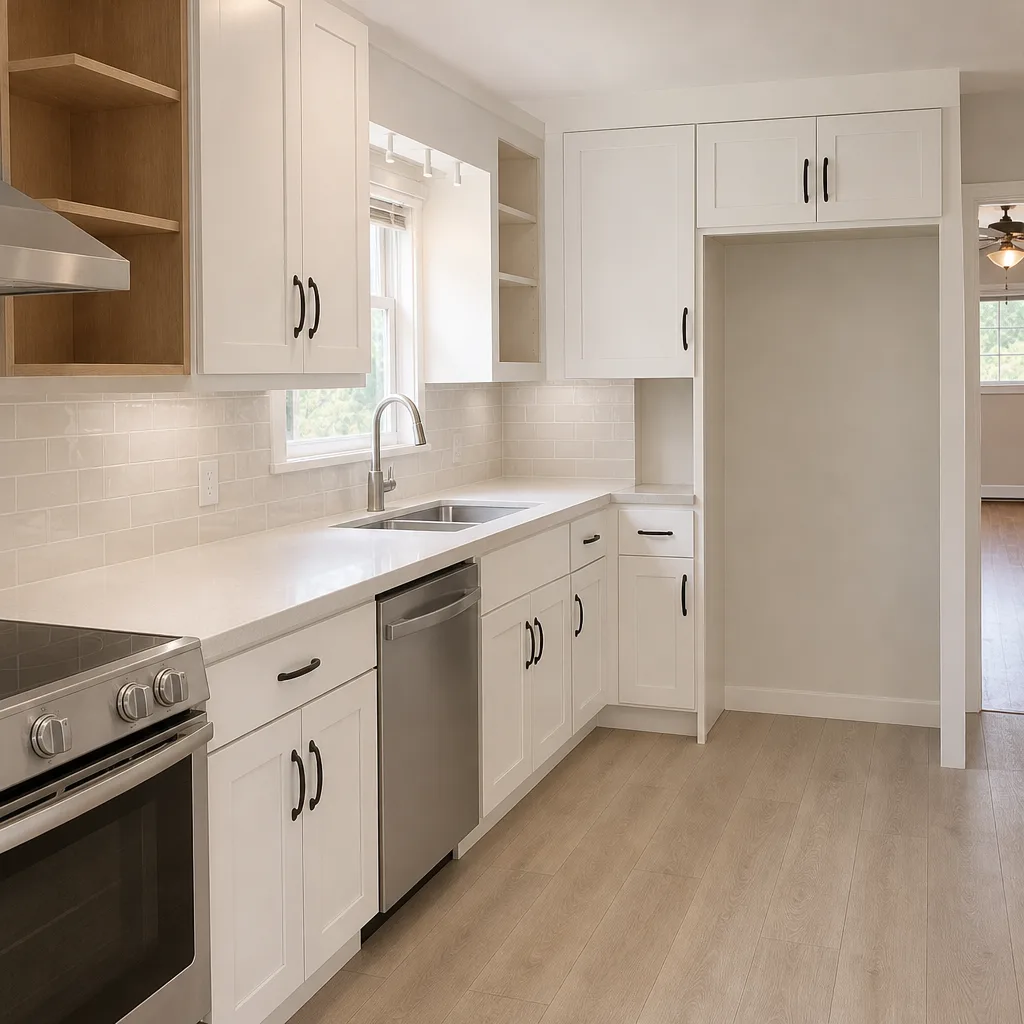 After
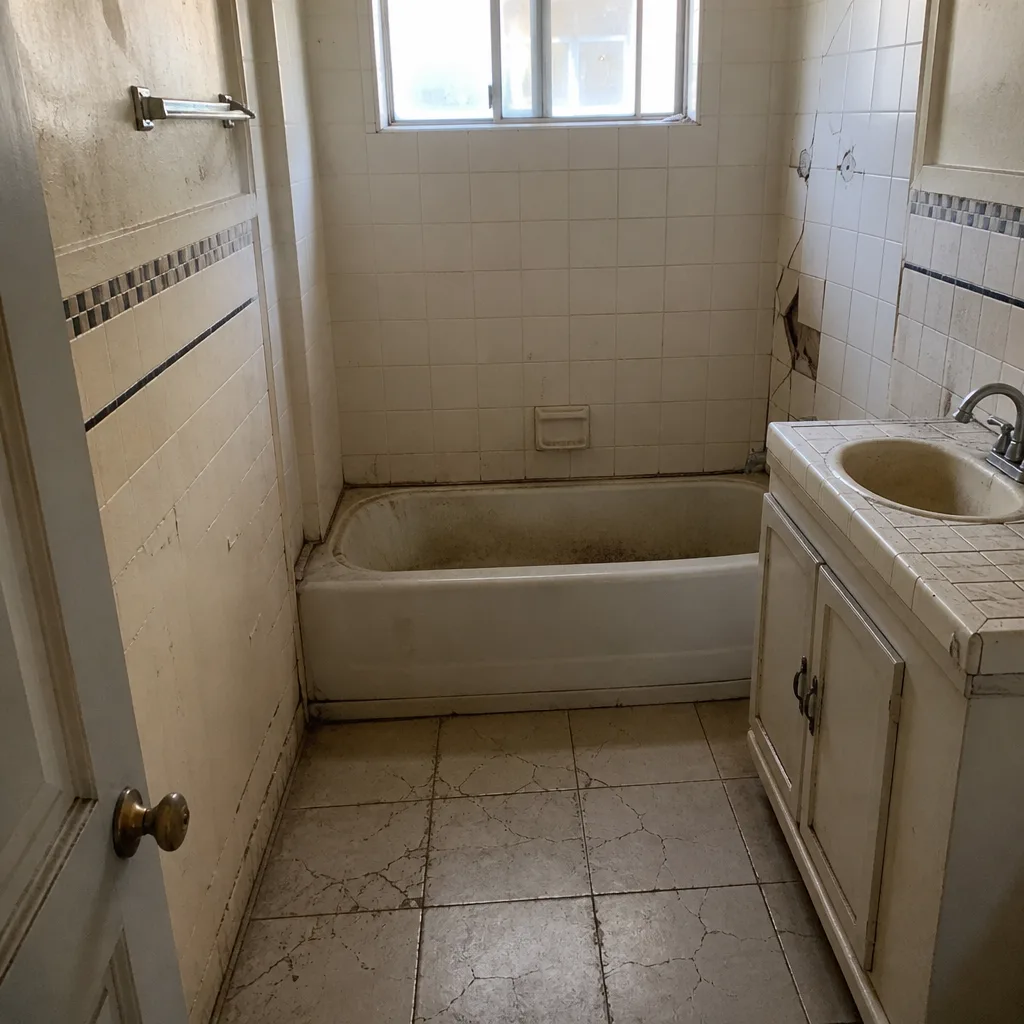 Before
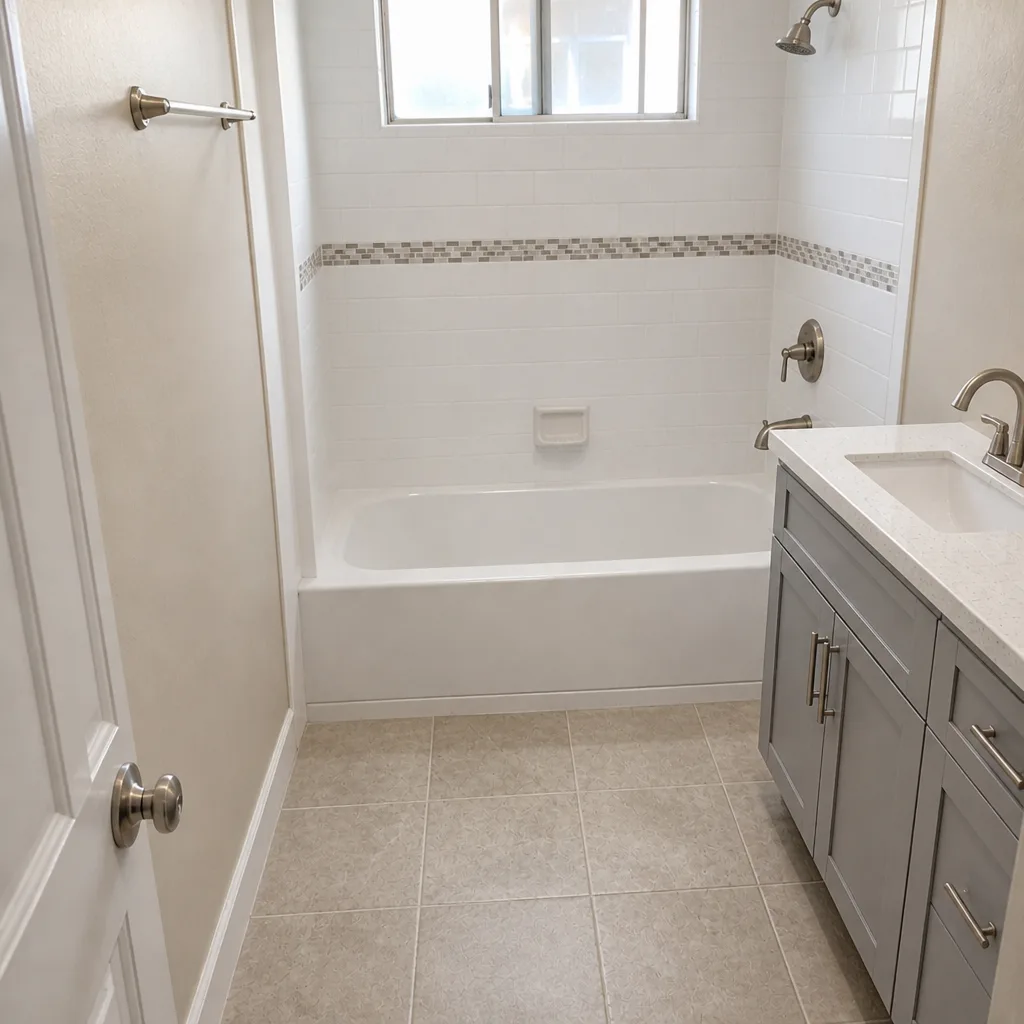 After
When to Call a Professional
Call for a professional look as soon as any of these show up on your house: a crack wider than a nickel that’s growing, a diagonal crack from a corner of a door or window frame, stair-step cracking in masonry, doors that won’t latch or swing open on their own, efflorescence or soil creep at the toe of a retaining wall, gutter separation from the fascia, or granules in the gutter at coffee-can volume. Any single one of these deserves a look. Combinations, especially on the same wall, deserve a look now. We’d rather look at your house while there’s still time to monitor than after the wall opens.
Barrett & Sons Construction is a Glendale contractor with a real name and a real phone. Every scope arrives in writing before work starts, every permit gets pulled and inspected, and every job is backed by our written 90-Day Done Right Promise – if something’s not done right, one call brings us back. Call (844) 560-4526 for a free estimate, or to talk through what you’re seeing on your house before you commit to anything.
Frequently Asked Questions
A stucco crack wider than a nickel (around 3/16 inch) is where we stop assuming it’s cosmetic. Narrower than 1/16 inch is almost always benign. Between 1/16 and 3/16 inch, the pattern and direction matter more than the number – a diagonal crack from a door corner in that width range is more interesting than a vertical hairline crack at that width. If you’re not sure where your crack falls, call (844) 560-4526 for a free estimate and we’ll take a look.
That’s almost certainly the expansive clay soil under the house swelling with winter rain and shrinking back in summer, combined with wood framing expanding in wet air. In Glendale, it’s a normal seasonal pattern on many older homes. What to watch for is worsening year over year – a bind that gets slightly worse each winter is a sign the foundation edge underneath is moving, and worth a look before it turns into a crack. Call (844) 560-4526 to schedule a free estimate if the pattern is new or worsening.
Efflorescence alone is not an emergency – it just means water is moving through the wall. On a retaining wall, that almost always means drainage behind the wall is failing or undersized. If you see efflorescence together with soil creep at the toe or a gap at the top of the wall, that’s an active-movement pattern and worth a professional look. Call us for a free estimate before the next rainy season – (844) 560-4526.
A handful of granules in a gutter after a storm is normal wear. A coffee-can’s worth every season, combined with dark streaking across large areas or gutter separation from the fascia, is the warning pattern that predicts an interior leak one to two seasons out. The most useful data point is roof age plus permit history – a permitted roof replacement has a paper trail at the city. Call (844) 560-4526 for a free second opinion on any written estimate you’ve been quoted.
Yes – hillside homes carry a bigger share of retaining wall and drainage risk. The signals to watch are the retaining wall failure signs above (efflorescence, toe creep, top gap), plus any new soil movement at the base of a slope, and any water pooling on the uphill side of the house. Hillside grading and drainage work is something we do see a lot in Glendale’s foothill neighborhoods. Call (844) 560-4526 to talk through what you’re seeing.
In many Glendale homes with mild movement, improving drainage around the foundation – regrading, extending downspouts, and keeping water off the footing – stops the seasonal movement from getting worse. If the movement has already opened foundation cracks or affected structural framing, drainage alone won’t fix that, but it’s still part of a complete repair. A free estimate will tell you which situation you’re in. Call (844) 560-4526.
Let’s Read Your House Together
A door that sticks in December and frees up in April may be nothing. A door that binds one winter and gets worse each winter after that is telling you a story about the soil under the house. Same with cracks, rails, gutters, and retaining walls – the signals are in the pattern, not the single fact. If you’re not sure whether what you’re seeing is a seasonal fact or a multi-season trend, walk through it with someone who looks at Glendale houses every week. We look at these signs on Glendale homes because they show up in the work we do – from Barrett & Sons Construction Glendale home repairs through Fence Installation in Glendale, Home Additions & ADU in Glendale, and larger structural work. Every job we run is permitted, priced in writing before it starts, and backed by the 90-Day Done Right Promise. Call (844) 560-4526 to schedule your free estimate – the roof, the wall, and the crack are all worth a look.
Written by the team at Barrett & Sons Construction Glendale.