
Last updated November 17, 2026
 Bathroom remodeling
 Kitchen remodeling
 Home additions & ADU
 Roofing
 Windows & doors
 Driveway & pavers
 Fence
Free written scope consultation - allowances, timeline, and change-order rules on paper before a single trade is scheduled
Bathroom Remodeling Warning Signs Every Homeowner Should Know
A floor that feels slightly soft near the toilet isn’t a “settling” issue. It’s subfloor rot from a wax ring that’s been failing quietly for two or three years, and it usually means the flange is compromised too. That’s the thing about bathroom problems: they almost never start with a dramatic burst of water. They start with a puckered baseboard, a grout line that looks “off,” or a fan that’s been humming the same tune since 2011. This guide translates the specific things you’re noticing in your Glendale home into what they actually mean, how urgent they are, and when to stop repainting and start planning. We’ll cover the signals, the fix costs, and the errors we see most often.
Quick Answer
The most serious bathroom remodel warning signs are soft or bouncy floors near the toilet, bubbling paint at the base of a wall, grout cracks that keep coming back after repair, and ceiling stains beneath a second-floor bath. All four point to hidden water damage or a failing substrate, not cosmetic wear. Any of them means you should stop patching and get the plumbing and subfloor checked before the repair grows from a few hundred dollars into a five-figure rebuild.
Styles & brands we work with
- Kitchen remodeling
- Bathroom remodeling
- Home additions & ADU
- Roofing
- Windows & doors
- Driveway & pavers
- Fence
Table of Contents
- 1. Soft or Bouncy Floors Near the Toilet
- 2. What Different Grout Cracks Actually Tell You
- 3. When Your Exhaust Fan Stops Doing Its Job
- 4. Reading Ceiling Stains Below a Second-Floor Bath
- 5. Paint Bubbling at the Base of the Wall
- 6. Red Flags From an Unpermitted Remodel
- 7. What a Contractor Walkthrough Should Catch
- 8. Common Mistakes to Avoid
Soft or Bouncy Floors Near the Toilet
If you press your heel into the floor beside the toilet and it gives even a little, water has been reaching the subfloor for a long time. In our experience across Glendale bathrooms, the culprit is nearly always a wax ring that lost its seal years ago. Every flush sends a thin trickle of water under the toilet, and particleboard or plywood soaks it up like a sponge before it ever shows on the ceiling. By the time the floor feels soft, the toilet flange underneath is often rusted or broken too.
When we open one of these up, we usually find one of three things:
- Staining and delamination right around the toilet footprint – the early stage, still fixable with subfloor repair and a new ring.
- Soft, crumbly wood spreading toward the tub or vanity – the rot has moved past the toilet area and the flange is compromised.
- A rocking toilet that you can shift by hand – the flange is broken or the subfloor has lost its grip on the bolts entirely.
Don’t test a soft floor by jumping on it or by bolting down a new toilet onto the same failing wood. A plumber or a remodel crew needs to pull the toilet, check the flange, and probe the subfloor. In older Glendale homes – especially the 1920s and 1930s stock near Adams Square and along Chestnut Street – the floor structure under a bathroom may be original boards that have already endured a couple of failed wax rings in their lifetime. If the wood is punky, it gets replaced, not dried out and covered over.
How urgent is it?
Soft flooring is a “call this week” problem, not a weekend emergency. Water is still seeping every time someone flushes, and the rot spreads. If you also see a water stain on the ceiling below or smell something musty, treat it as urgent and get it looked at right away.
What Different Grout Cracks Actually Tell You
Not every grout crack means the same thing, and knowing which is which saves thousands of dollars in unnecessary work. In our experience, there are three distinct patterns, and they point to three different problems.
- Hairline cracks along tile joints that appear seasonally. These follow thermal movement. Tile, grout, and the wood framing underneath expand and cool at different rates, especially when Glendale swings from cool nights in the hills near Verdugo Woodlands to dry afternoon heat. These are usually cosmetic and can be regrouted.
- Long, straight cracks that run along a floor line or a wall/floor junction. These point to substrate deflection – the floor flexes when you walk on it, and the grout can’t keep up. The tile is fine; the framing underneath is not stiff enough. This is the single most common symptom we find in older Glendale bathrooms where tile was laid directly over original plank subfloor.
- Cracks spreading outward from behind a wall or running alongside a tub or shower base. These point to water intrusion from behind. Something is leaking, the substrate is swelling or shifting, and the tile is the last thing in the assembly to notice. This is the one to take seriously before cosmetic repair.
A good test: trace the crack with a pencil mark and a date. If it reopens in the same place after regrouting within a year or two, the underlying problem was never addressed. Fresh grout over moving tile is a bandage; the cause lives under the floor.
When Your Exhaust Fan Stops Doing Its Job
Bathroom fans are supposed to clear the room’s moisture in a few minutes after a shower. When they don’t, mold quietly gets a foothold in the one room in your house that already has the most water in the air. Glendale’s humidity swings do this no favors – a shower at 7:00 p.m. in a modest or uninsulated bath leaves condensation clinging to the walls and any wall cavity that’s not sealed. The trick is telling a working fan from one that’s just making noise.
Three tests we run on every bathroom fan:
- The tissue test. Hold a square of toilet paper against the grille while the fan runs. If the fan can’t hold it flat, it’s not moving enough air to keep mold out.
- The mirror test. Run the fan and a hot shower. If the mirror is still fogged ten minutes after you’ve shut the shower off, moisture is pooling.
- The rattle test. A fan that rattles, buzzes, or takes a moment to spin up is often a worn motor or a slipping bearing. It’s still turning, but the airflow has dropped dramatically.
A common cause we see on Glendale remodels: a fan that was oversized for the room’s original square footage but ducted into a short, kinked run of flex line in the attic. That fan is rated for a certain CFM at the box, but the actual airflow leaving the bathroom is a fraction of it. We also see fans terminating directly into the attic instead of venting outdoors – a moisture problem in the attic disguised as a bathroom fan. The fix is usually a bath fan replacement with a proper duct run out through the roof or a gable wall, not a bigger fan on the same duct.
Reading Ceiling Stains Below a Second-Floor Bath
That yellowish, brownish, or faintly orange stain on the ceiling below a second-floor bathroom is a map. Where it sits, what shape it takes, and what the edges look like tells you where the water is coming from.
Ring-shaped stains directly under the toilet
These are wax ring failures. The location is a dead giveaway – right under the toilet’s footprint, in a fairly tight circle. The edges will look dry now but the center may still feel slightly damp. If you see this pattern in a Glendale home, know that the ring is a symptom: the flange condition and the subfloor condition are the underlying issue.
Stains along a wall line or spreading from a corner
These are supply line drips between floors. A slow drip from a braided supply line, a shutoff valve, or a ferrule connection tracks down the length of the pipe, pools on the ceiling, and stains along a straight line. Supply drips often show up when the water pressure is highest – either a surge from the city main or right after a line is used. If the stain returns wet on the same days, this is the pattern.
Stains near the shower or tub but offset from the toilet
These point to shower pan or drain leaks. A pan leak typically starts small and shows as a soft, spreading stain well away from the toilet, sometimes at the far edge of the ceiling below. A drain leak usually stains right at the drain’s vertical line. Both are a “call now” scenario because the water has been running between the pan liner and the structural floor, where it can quietly rot a wide section before you ever see the stain wider than your hand.
Whatever the pattern, don’t repaint the ceiling and hope. A stain that reappears – or that keeps feeling damp to the touch – is the water finding its way back.
Paint Bubbling at the Base of the Wall
If a strip of paint along the bottom six inches of a bathroom wall is bubbling, cracking, or peeling, don’t reach for the scraper and a fresh can of latex. That bubble is water pushing off the paint from behind. The paint is the last line of defense the wall has, and the fact that it’s peeling tells you water has been in the drywall for a while.
Two causes dominate in Glendale bathrooms:
- A leaking shower pan or drain connection leaking into the subfloor and wicking up into the drywall at the base of the wall.
- A failing tub-to-wall or shower-to-wall caulk joint that’s been feeding slow moisture into the wall cavity on every shower for years.
Sometimes the culprit is a leaking supply line inside the wall, or a toilet that’s been seeping around a failed floor seal. The trouble is you usually can’t tell from the outside. Paint bubbles are a “call us now” signal, not a “weekend to-do.” Left alone, the drywall deteriorates into a soft, crumbly material that grows mold in as little as a couple of weeks, and the repair scope moves from a few hundred dollars of drywall to a full tile tear-out and waterproofing rebuild. If you’re in an older home with a tiled tub surround, this is the single most common thing we find when a homeowner finally calls about “a little water smell.”
Red Flags From an Unpermitted Remodel
When we walk a Glendale house before a new remodel, we look for signs the previous job was done without permits. It matters for two reasons. First, unpermitted plumbing and electrical work is often hidden below tile and inside walls, and it becomes our problem the moment we open them up. Second, when we pull permits for the new work, the city inspector can require the previous unpermitted work to be brought up to code before signing off on ours – a conversation nobody wants halfway through a remodel.
The most common signs:
- No paper trail. The homeowner can’t produce a permit for the previous bathroom work, or can’t produce the contractor’s final inspection sign-off. Legitimate plumbing and electrical work cites a permit number on file with the city of Glendale.
- Oddly placed fixtures. A toilet that doesn’t leave the code-minimum clearance to the vanity, or a shower valve placed too close to a wall or window, suggests no plan review happened.
- No access panel or a missing GFCI. Modern bathrooms require an accessible shut-off for the tub or shower valve, and ground-fault protection on outlets near water. An outlet with no GFCI test button, especially within arm’s reach of a sink, is a tell.
- Tile over tile or a drain that “sits a little high.” Tile installed on top of existing tile – rather than properly removed to the substrate – raises the floor and shortens the depth of the shower drain assembly. We see this in maybe one in five bathrooms we open up in Glendale.
- Mismatched waterproofing. A shower backer that isn’t consistent with the rest of the wall, or a shower pan liner that doesn’t turn up the wall, signals the waterproofing was done ad hoc rather than to a recognized standard.
None of this means the previous remodeler was dishonest. It means the paper side wasn’t handled, and the correction cost lands on whoever comes next. When Barrett & Sons Construction Glendale pulls permits for your new work – every eligible job, no exceptions – that permit and inspection put the paper trail on the record. The inspector works for you, not for us. That’s the whole point of the process.
For homeowners considering a larger scope beyond the bathroom, we also handle Home Additions & ADU in Glendale on the same permit discipline.
What a Contractor Walkthrough Should Catch
A proper walkthrough of a bathroom you’re about to remodel should find more than what you noticed. When we walk a Glendale bathroom, we check these things, and any honest contractor you hire should too:
- The toilet flange is examined directly, not inferred. The toilet comes off if we need to see it.
- The subfloor gets probed near the toilet, tub, and shower. Firmness underfoot along the wet areas is not optional.
- The visible plumbing at shutoffs, supply lines, and drain joints is photographed before demo so the scope is clear.
- The bath fan ducting and terminations are traced into the attic or wall to confirm the fan vents outdoors, not into the attic void.
- Ceiling stains below the bath get noted, mapped, and addressed in scope – not skipped over as cosmetic.
- The permit history is checked with the city so an unpermitted prior job doesn’t surprise anyone mid-project.
When you get a scope and pricing from us, it’s a written line-item scope with allowances for the things that vary (fixtures, tile, finishes) and a written change order before any price moves – no surprise invoice at the end because “the allowance wasn’t on the paper.” That’s a different experience from a quote on the phone that becomes a different bill at your door. Our crews have up to 28 years of experience, but the paper trail is what protects you when the project is done.
If your check turns up a bigger underlying issue – a failing subfloor, unpermitted framing, water in a wall cavity – it’s sometimes a sign to expand the scope instead of patching. We also see this with Glendale homeowners who started with a bathroom and ended up planning structural work; see our Barrett & Sons Construction Glendale home for the wider picture.
Common Mistakes to Avoid
Here’s the list we hand to homeowners after they’ve spotted one of the signs above and before they’ve hired anyone:
- Painting over a bubbling wall or repainting a ceiling stain. The discoloration’s source hasn’t been addressed. The stain comes back; the bubble re-forms; the water keeps eating drywall.
- Bolting a new toilet onto a soft floor. The wax ring won’t hold to crumbled wood, and you’ll be back in the same spot within a year. Fix the wood first.
- Regrouting tile without addressing the crack it was covering. If the crack returns within a year or two, whatever was moving underneath was never fixed. Grout is not structural.
- Replacing a weak bath fan with a bigger one on the same duct. A bigger fan on a kinked 3-inch flex line moves roughly the same air. The duct run is the problem, not the fan’s advertised CFM.
- Hiring a contractor who quotes a firm price before seeing the flange or subfloor. In Glendale, a real quote comes after the walkthrough. A number given on the phone is a number designed to get the door open, not a plan.
- Skipping the permit because “the last guy said it wasn’t required.” Every Glendale bathroom remodel that touches plumbing, electrical, or structural work needs a permit. When the next owner (or the appraiser) asks for it, “the contractor told me it wasn’t needed” isn’t an answer.
- Covering tile-over-tile work with fresh tile. Every layer stacks. Drain depth, door clearance, and toilet height all shrink with each added layer. The right move is to strip to the substrate and see what’s actually there.
One more: don’t assume the deck outside needs attention while you’re fixing the bathroom. Driveway and hardscape deferred maintenance is its own conversation – see Driveway & Pavers in Glendale if that’s where your eye keeps going.
See the difference
 Before
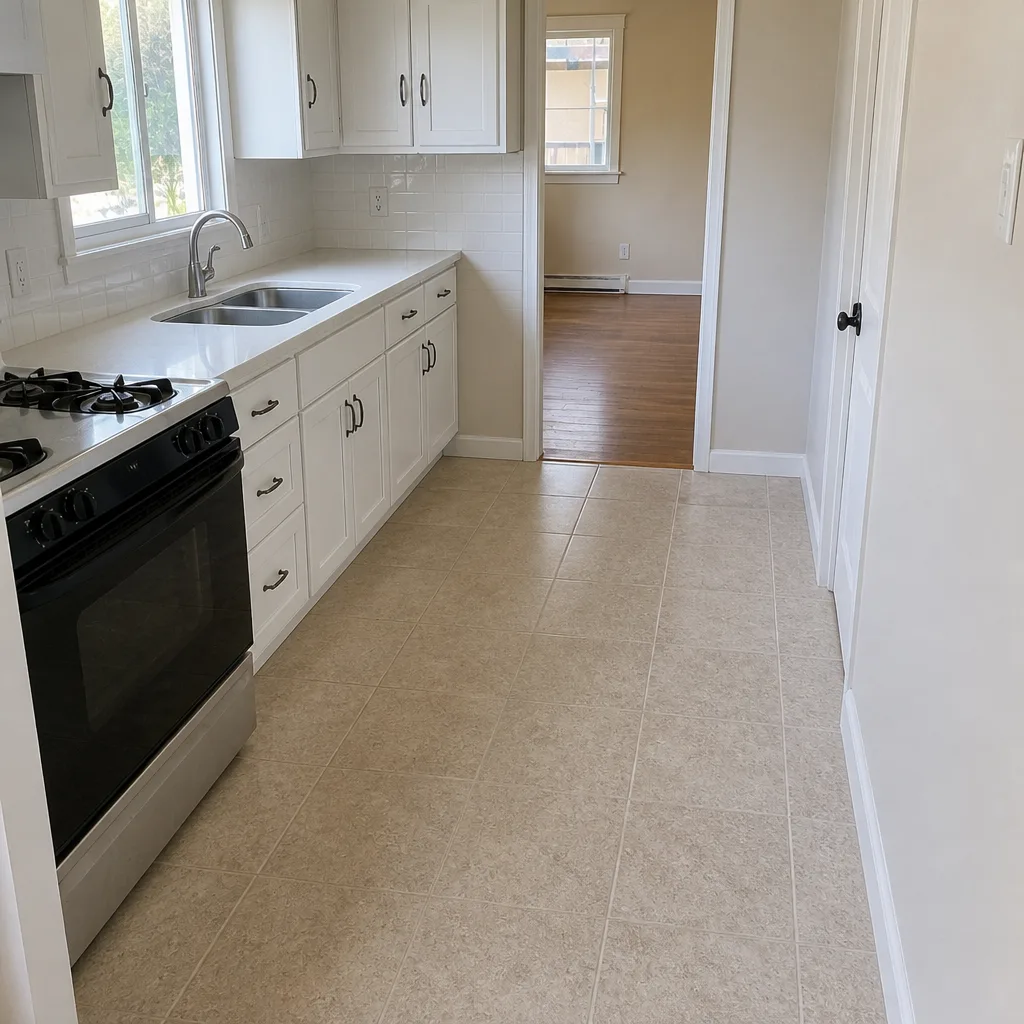 After
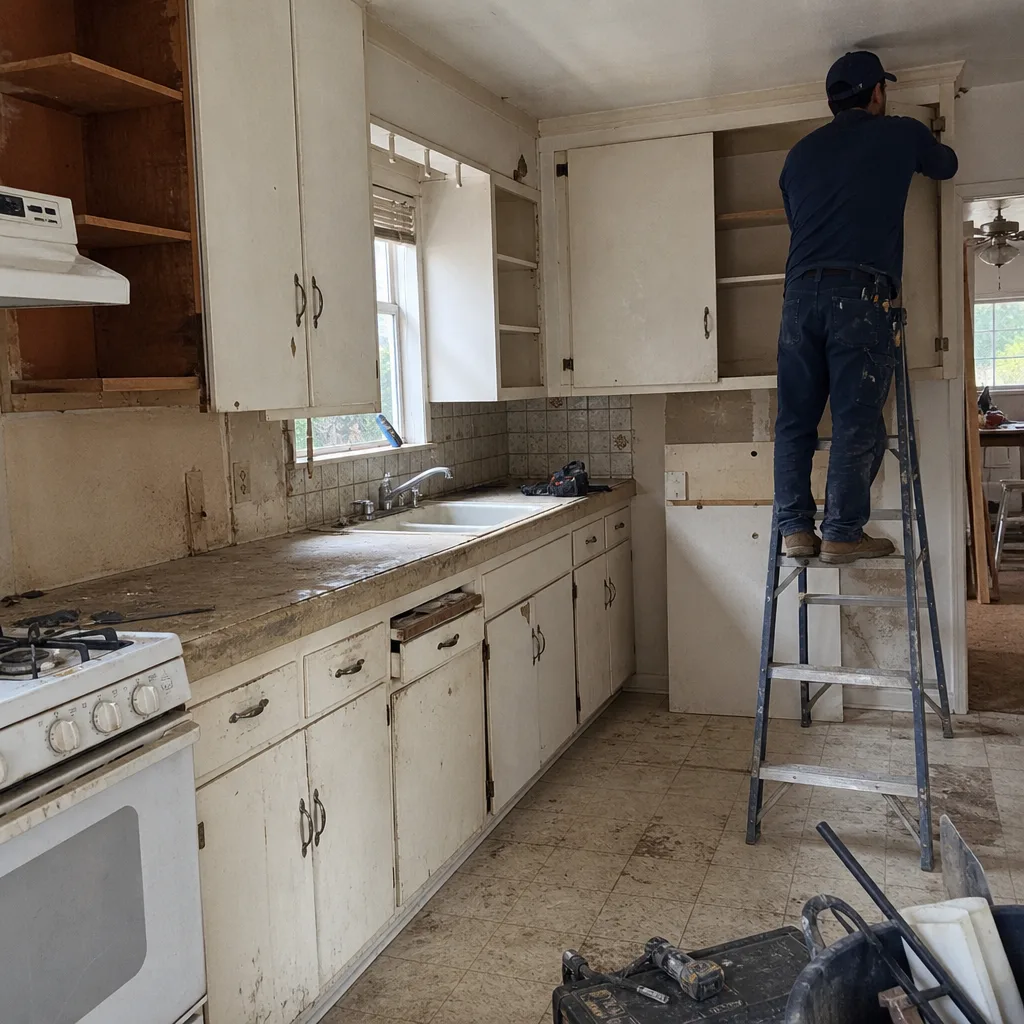 Before
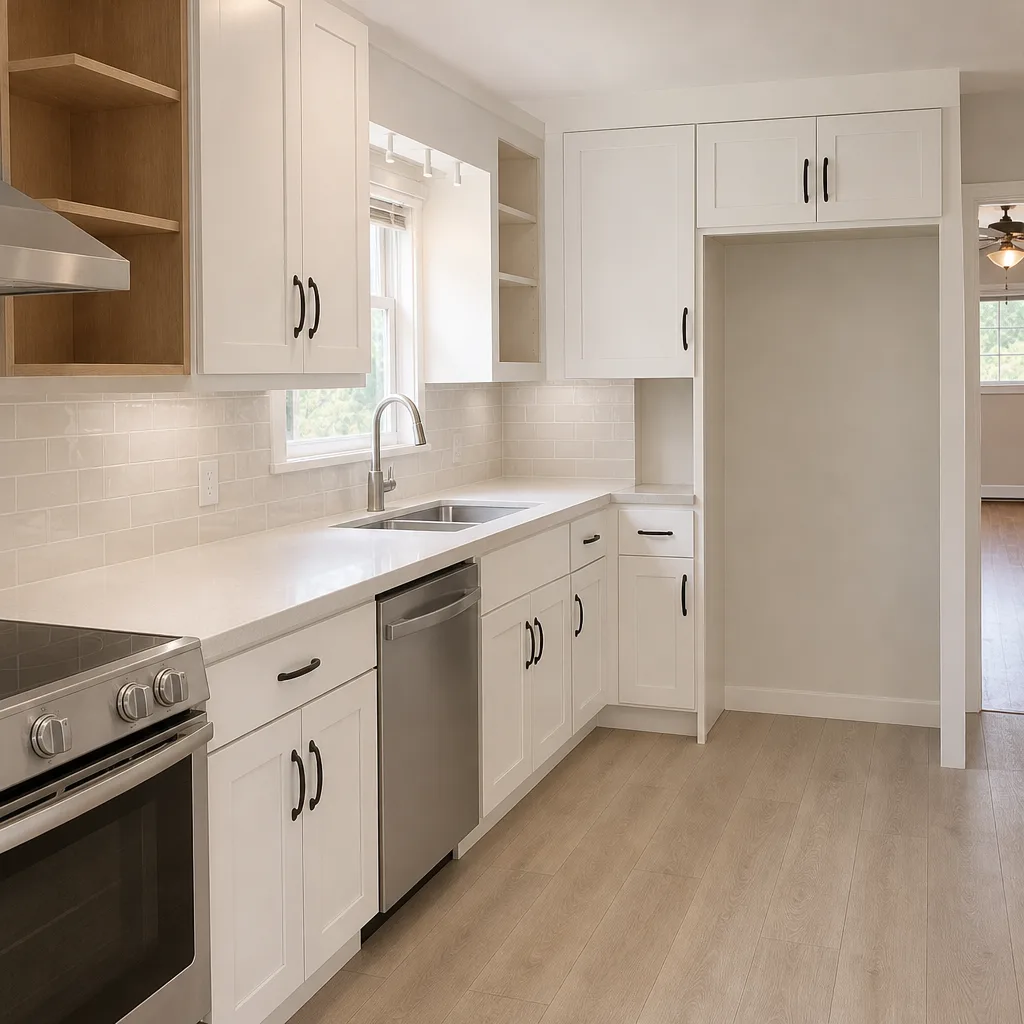 After
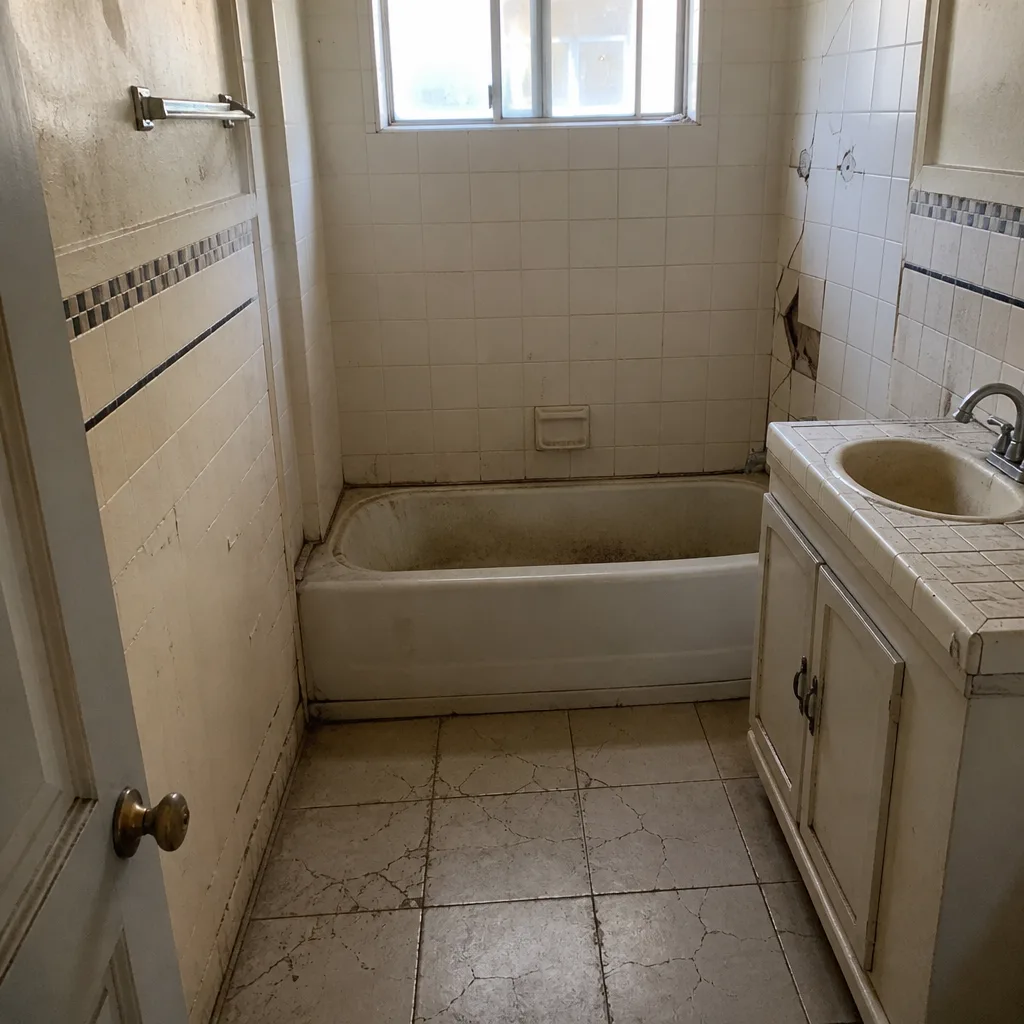 Before
 After
When to Call a Professional
Call a professional – a licensed plumbing or remodeling contractor – the moment a soft floor, bubbling paint, active ceiling stain, recurring grout crack, or a fan that can’t hold a tissue shows up on the list. One sign alone is a call. Two or more signs in the same bathroom is a remodeling scoping conversation, not a repair. A wax ring that’s been failing quietly for two years can hide rot that spreads under the whole wet area. A shower pan leak can quietly soak structural framing before the ceiling shows it. This is not the place to experiment with a Youtube how-to – the water damage is not visible after a certain point, and by the time you see it, the repair has already grown.
Barrett & Sons Construction Glendale offers free estimates in Glendale – call (844) 560-4526. We pull permits and sign inspections on every eligible job, and any change in scope reaches you as a written change order before work happens. When the job is done, it’s backed by the written 90-Day Done Right Promise: if it’s not right, one call brings Tom back.
If your next project touches an exterior boundary – fence, gate, or privacy screen on a side yard – Fence Installation in Glendale covers the neighborhood specifics we’d rather you know in advance.
Frequently Asked Questions
A short repair – new wax ring, replacement of a small section of subfloor, and toilet re-set – typically runs $450 to $950 in Glendale, assuming the flange is intact. If the flange is broken or the rot has spread under the tile, the range climbs substantially, sometimes to a full tile and subfloor replacement. The number moves with what’s underneath, and you can’t know that on the phone. Call (844) 560-4526 to schedule a free estimate and get an honest scope.
Not without a written change order you’ve signed before any work proceeds. That’s the rule on every Barrett & Sons job – every scope, every allowance, and every price change is in writing before a single nail moves. What shows up in a wall (or under a floor) sometimes changes the scope, and when it does, the change arrives in writing. Call (844) 560-4526 free estimates.
Yes – every eligible job includes permits pulled and inspections signed. Plumbing, electrical, and structural work in a Glendale bathroom requires a permit, and we treat that as a feature, not a hurdle. The permit inspector works for you, not for us. Call (844) 560-4526 if you want to talk through what your bathroom will need.
The fastest check is the city of Glendale permit records for your property – pull the permit history before you buy a home or before you remodel. On the walkthrough, unpermitted work often shows up as tile stacked over tile, missing GFCI protection near the sink, an inaccessible shower valve with no shutoff panel, or oddly placed fixtures. None of it is a dealbreaker – but it belongs in the scope so nobody’s surprised later. Call (844) 560-4526 for a free second opinion on any written estimate if you’re already in the middle of a conversation.
Yes. A fan that’s making noise but not moving enough air is one of the most common reasons mold finds a foothold in a bathroom here. Glendale’s humidity swings and warm afternoons make a slow fan worse, because the moisture has to leave through a system that isn’t inviting it out. The tissue test will tell you in 10 seconds. If your fan fails it, call (844) 560-4526 – a fan replacement and a proper duct run is a manageable repair that prevents expensive mold correction later.
A straightforward Glendale bathroom remodel – from demo to final inspection – typically runs 3 to 6 weeks, depending on whether plumbing or structural work is uncovered and how lead times for fixtures, tile, and finishes line up. Unpermitted prior work or a rotted subfloor adds time on the front end of the schedule, not the back. Call (844) 560-4526 to schedule a walkthrough and get a schedule tied to your actual scope.
The Bottom Line
The signs in this guide are not random. Each one is a specific signal, and each has a specific meaning: soft floor equals rotten subfloor, ceiling stain equals active leak, bubbling paint equals water in the wall, recurring grout crack equals movement underneath. When you catch one early, you’re looking at hundreds of dollars and a few days. When you catch three at once, you’re looking at a remodel scope. Glendale homeowners in older housing stock face more of these than most because the framing and tile work are original. If you noticed one sign while reading this, get it looked at. If you noticed two, plan a walkthrough. Call (844) 560-4526 to schedule a free estimate with Barrett & Sons Construction Glendale.
Written by the team at Barrett & Sons Construction Glendale.