
Last updated November 17, 2026
 Bathroom remodeling
 Kitchen remodeling
 Home additions & ADU
 Roofing
 Windows & doors
 Driveway & pavers
 Fence
Free written scope consultation - allowances, timeline, and change-order rules on paper before a single trade is scheduled
Bathroom Remodeling Maintenance Schedule: What to Do and When
Grout doesn’t fail because it was installed wrong. It usually fails because nobody sealed it at the six-month mark. That one missed step causes more callbacks than any installation error we see, and it’s the reason a brand-new bathroom in Glendale can start looking tired while the tile underneath is still perfectly sound. Sealants wear out. Caulk shrinks. Exhaust fans clog with dust. None of that is a workmanship problem, but all of it decides whether your remodel looks sharp at year ten or year three.
This guide lays out the actual month-by-month schedule: what to do at month one, month six, month twelve, and every year after, plus how Glendale’s dry heat and hard water change the math. You’ll learn the difference in upkeep between porcelain and natural stone, how to catch caulk failure before it reaches your subfloor, and exactly where our 90-Day Done Right Promise ends and your own routine upkeep begins. Print it, stick it inside a cabinet door, and check it twice a year.
Quick Answer
Seal grout and re-caulk every 6 to 12 months, check your exhaust fan’s airflow twice a year, and inspect caulk lines around the tub and shower pan monthly. In Glendale’s hard-water and dry-heat conditions, expect to descale fixtures every 2 to 4 weeks and reseal natural stone more often than porcelain. The first year needs the most attention; after that, a simple seasonal routine keeps the room solid for a decade.
Styles & brands we work with
- Kitchen remodeling
- Bathroom remodeling
- Home additions & ADU
- Roofing
- Windows & doors
- Driveway & pavers
- Fence
Table of Contents
- The First 30 Days: What to Watch After the Crew Leaves
- Months 2 Through 6: Sealing, Caulking, and the Exhaust Fan Check
- Months 6 Through 12: The First Full Seasonal Cycle
- How Glendale’s Dry Heat and Hard Water Change Your Schedule
- Porcelain vs. Natural Stone vs. Large-Format Tile: What Each One Demands
- How to Spot Caulk Failure Before Water Reaches the Subfloor
- What the 90-Day Done Right Promise Covers (and What Doesn’t)
- The Year-Two-and-Beyond Routine
The First 30 Days: What to Watch After the Crew Leaves
The first month after a bathroom remodel in Glendale isn’t about maintenance yet. It’s about observation. Fresh caulk needs time to fully cure, and new grout continues to harden for weeks after installation. That’s why the smartest thing you can do in month one is look, not scrub.
Here’s what to check in the first 30 days:
- Water pressure at every fixture. Turn on the shower, the sink, and the tub. A weak trickle or a sputter means a screen or cartridge needs a look, and it’s easier to fix in week two than month six.
- Drainage speed. A shower pan that pools water for more than a few minutes has a slope issue. That’s a callback, not a maintenance item, so flag it right away.
- Caulk lines for separation. Run a finger along the tub-to-tile seam and the shower pan edges. Fresh caulk should be tight and flexible. Any gap in month one is worth a call.
- Grout joints for pinholes. Small voids can appear as grout cures. They’re normal but should be noted so you can seal over them at month six.
- Exhaust fan performance. Hold a tissue to the grille. If it doesn’t pull the tissue up and hold it, the fan or ducting needs attention before moisture becomes a problem.
Don’t use harsh cleaners yet. Mild soap and water only for the first 30 days while grout and sealant cure. Skip the vinegar and bleach entirely until month two. One more thing: keep your paperwork handy. Every scope, allowance, and change order should be in writing, and that file is what you’ll reference if anything needs a second look. If you’re still planning a remodel rather than maintaining one, our Barrett & Sons Construction Glendale home page is the place to start.
Months 2 Through 6: Sealing, Caulking, and the Exhaust Fan Check
This is where maintenance actually begins, and it’s where most homeowners fall behind. The two big dates in the first six months are the three-month caulk inspection and the six-month grout seal.
Month 3: First Caulk Inspection
At the three-month mark, run your finger along every seam again, this time looking for the first signs of shrinkage. Caulk shrinks as it cures, and a hairline gap at the tub edge is normal. If the gap is wider than a credit card’s edge, or if caulk pulls away at a corner, that’s a callback within your 90-Day Done Right Promise window. Call it in.
Month 6: The Grout Seal (The One Everyone Skips)
Month six is the seal drop. Grout sealant is a sacrificial layer, and on a shower floor it’s worn thin by six months of hot water and soap. Here’s the routine:
- Clean the grout with a pH-neutral cleaner and a soft brush. No acid, no vinegar, no bleach.
- Let the floor dry for 24 hours. Sealant won’t bond to damp grout.
- Apply penetrating sealer with a small foam brush, working it into the joints and wiping excess off the tile face within 10 minutes.
- Stay off the floor for 24 hours and keep it dry for 48.
For natural stone like travertine or marble, the six-month mark is also a good time to schedule professional resealing, which we recommend once a year for stone.
Month 4: The First Exhaust Fan Check
Pull the fan cover and clean the grille with a vacuum brush attachment. Dust buildup cuts airflow, and a fan that’s rated for the room but starved of airflow will still let moisture hang in the air. If you can’t remember the last time you checked CFM (cubic feet per minute), a bathroom up to 100 square feet wants at least 50 CFM, and Glendale’s dry climate means you’re mostly clearing shower moisture, not humid summer air. Many mid-size remodels bump to 80 CFM for insurance. A fan that’s undersized shows up as foggy mirrors and lingering damp twenty minutes after a shower.
Months 6 Through 12: The First Full Seasonal Cycle
By month twelve, you’ve logged a full year of water and weather. This is when you set the rhythm you’ll repeat for the next decade. Our crew has watched enough Glendale bathrooms age to know the year-one schedule is the one that decides how the room looks at year five.
Here’s what the back half of year one looks like:
- Month 7: Inspect the shower door seals and sweeps. The rubber strip along the bottom of a frameless glass door wears thin and starts to leak. Replacements are quick and cheap.
- Month 8: Descale every fixture. Hard water in Glendale leaves calcium deposits on faucets, showerheads, and glass. More on that in the next section.
- Month 9: Re-check the exhaust fan. Clean the grille again if you’re in a dusty part of town, and listen for a wobble or rattle that means the motor needs attention.
- Month 10: Check the toilet for a running flapper. A slow leak wastes water and can stain the bowl. A dye test in the tank is the fastest check.
- Month 12: Full annual inspection. Walk the caulk lines, reseal the grout that’s worn, check the vanity cabinets for moisture or soft wood, and look under the sink for the first sign of a drip.
Write the month-12 list on a card. Every year after this, month 12 is the reset point. That’s the entire secret to a bathroom that holds up: one thorough pass a year, plus the quick monthly checks.
How Glendale’s Dry Heat and Hard Water Change Your Schedule
Glendale has two things working against a bathroom: some of the hardest water in the region and a dry heat that pulls moisture out of the air fast, which dries out caulk and sealant quicker than a humid climate would. Both are manageable once you know how they hit the room.
The hard water problem. Calcium and magnesium build up on every wet surface, and that white film on your showerhead or the crusty ring around the drain is the visible part. The invisible part is what it does to your fixtures. You need cleaners that lift mineral scale without stripping the finish, because the wrong product will pit a brushed nickel faucet and void the warranty on the spot.
What to use and what to skip:
- Safe: A 50/50 mix of white vinegar and water for glass and tile, followed by a rinse. It works on mineral scale without harming ceramic.
- Safe: Citric-acid-based descalers for fixtures and showerheads. Soak a removable head in a cup of it for 20 minutes once a month.
- Skip: Abrasive scrubs, steel wool, and ammonia-based cleaners on plated finishes. They scratch and dull the finish.
- Skip: Any acid cleaner on natural stone. It etches the surface permanently.
The dry heat problem. Glendale summers pull moisture from grout and caulk fast, and that means more shrinkage, more frequent caulk checks, and a shorter shelf life for sealant in a south- or west-facing bathroom. Expect to reseal grout every 6 to 9 months instead of the 12 you might get in a cooler climate. The upside: less mold pressure than coastal areas, and exhaust fan demands are mostly about shower moisture, not lingering humidity. If you want to think ahead to how a window or door remodel helps ventilation, our Home Additions & ADU in Glendale page covers the layout side of things.
Porcelain vs. Natural Stone vs. Large-Format Tile: What Each One Demands
Before you pick a material, know what you’re signing up for. The maintenance difference between porcelain, stone, and large-format tile is real and worth thinking through before the tile is on the wall, not after. We’ve walked Glendale homeowners through this before every remodel we do, and it’s the question most people wish they’d asked sooner.
Porcelain and Ceramic Tile
The lowest-maintenance choice. Glazed porcelain doesn’t need sealing, and cleaning is soapy water plus a pH-neutral tile cleaner. Grout does need sealing every 6 to 12 months, and that’s the only real chore. If you want the easiest possible upkeep, this is it.
Natural Stone (Travertine, Marble, Slate)
Beautiful, and demanding. Stone is porous and needs sealing every 6 to 12 months, more often in wet areas. It’s also sensitive to acid: vinegar, lemon, and most household cleaners will etch the surface permanently. Use a stone-specific pH-neutral cleaner, dry the shower walls after use, and expect to have it professionally resealed once a year. In Glendale’s hard water, stone also shows water spots faster, so squeegee the shower every time.
Large-Format Tile (12×24 and Up)
Fewer grout lines means less to seal and less to scrub, which is the appeal. The catch is that large-format tile has more surface area and can show every water spot and dust film across a wide run. It needs a squeegee routine and regular cleaning, but the grout maintenance is minimal. Large-format on a shower floor can also be slippery, so consider a smaller mosaic there for grip.
The short version: porcelain is the lowest-effort, stone is the highest, and large-format lives in the middle with an easy grout routine but a fussier cleaning surface.
How to Spot Caulk Failure Before Water Reaches the Subfloor
Caulk is the thin line between a shower that lasts and a subfloor repair that runs into the thousands. Water doesn’t announce itself. It seeps behind the tile, soaks into the substrate, and shows up as a soft spot, a musty smell, or a stain on the ceiling below. By then you’re past maintenance.
Here’s the inspection checklist we walk every Glendale customer through, and it takes about five minutes a month:
- Run a finger along the tub-to-tile seam. It should feel smooth and slightly flexible. Any give, gap, or grit means the caulk is failing.
- Look at the shower pan edges. Water should never sit in a puddle at the perimeter. If it does, either the slope or the caulk is wrong.
- Check the corners where two walls meet. These are the first places caulk pulls away, because they move with the house.
- Look for dark spots behind clear caulk. Mold growing under the sealant means moisture is trapped. Remove and re-caulk.
- Press the tile at the shower base. A hollow sound or slight movement means the thinset bond is compromised. Stop using the shower and call it in.
Re-caulking is a 60-minute job with the right silicone caulk and a smoothing tool. Do it every 6 to 12 months around wet areas, and immediately any time you spot a gap. If you catch failure early, you’re spending $15 on a tube. If you catch it late, you’re looking at a subfloor repair.
What the 90-Day Done Right Promise Covers (and What Doesn’t)
We put the 90-Day Done Right Promise in writing on every contract, not buried in fine print. If something we installed isn’t right, you make one call and Tom comes back to make it right. It covers our work and the materials we put in. What it can’t cover is the routine wear that every bathroom puts on itself. That’s the line, and it’s worth knowing where it sits.
What the Promise Covers
- Caulk or grout that fails within 90 days of install because of workmanship
- A shower pan that doesn’t drain or pools water
- A leak from a fixture, valve, or drain we installed
- Tile that’s loose, hollow, or lipping at a joint
- An exhaust fan that’s undersized or not venting properly
What Shifts to Routine Upkeep After 90 Days
- Grout sealant wearing thin (that’s the six-month seal)
- Caulk shrinkage and normal weathering after the first year
- Hard-water scale and mineral buildup on fixtures and glass
- Scratches or etching from cleaning products that aren’t meant for the surface
- Worn shower door sweeps and seals
If you’re ever unsure which side of the line you’re on, call and ask. We’d rather look at it than have you guess. Every eligible job we do comes with permits pulled and inspections signed, and our crew members are background-checked and uniformed on every visit, so you know who’s at the door when a callback happens.
The Year-Two-and-Beyond Routine
After year one, the routine settles into four passes a year. This is the schedule we’d give our own family. Post it inside the vanity cabinet and check off each month.
- Every month: Squeegee the shower after use, descale the showerhead, inspect the caulk at the tub and shower pan, and look under the sink for drips.
- Every 3 months: Clean the exhaust fan grille, check the toilet for a running flapper, and inspect the shower door sweeps.
- Every 6 months: Reseal grout in wet areas, re-caulk the tub and shower base if it’s showing wear, deep-clean the tile and grout with a pH-neutral cleaner.
- Every 12 months: Full annual inspection, reseal natural stone, check the vanity cabinet finish, and test the water pressure at every fixture.
One last thing on year two and beyond: keep a simple log. Date the resealing, note the caulk replacements, write down which fixture you descale and when. It’s a two-minute habit that pays off if you ever sell the house, because a buyer who sees a maintenance record trusts the room more than one who doesn’t. And if you’re planning a second remodel down the line, our Fence Installation in Glendale and Driveway & Pavers in Glendale pages cover the exterior side of the same care-and-keep mindset.
Common Mistakes to Avoid
- Using vinegar or bleach on natural stone. Both etch the surface permanently. In Glendale, where stone already shows hard-water spots, one vinegar wipe can cost you a professional restoration.
- Skipping the six-month grout seal. This is the single biggest cause of shower grout failing early. Sealant is a wear layer, not a permanent finish.
- Ignoring an undersized exhaust fan. A fan under 50 CFM in a small Glendale bathroom leaves shower moisture in the air and in the grout. It’s one of the cheapest fixes in the room.
- Caulking over old caulk. New caulk won’t bond to old, and moisture stays trapped underneath. Remove the old line completely first.
- Using abrasive scrubs on plated fixtures. They dull the finish and can void the fixture warranty. Citric-acid descalers do the job without the damage.
- Washing a new remodel with harsh cleaner in month one. Grout and caulk are still curing. Mild soap and water only for the first 30 days.
- Assuming the promise covers hard-water damage. Mineral scale and cleaning-product damage are routine upkeep, not workmanship. Know where your responsibility starts.
See the difference
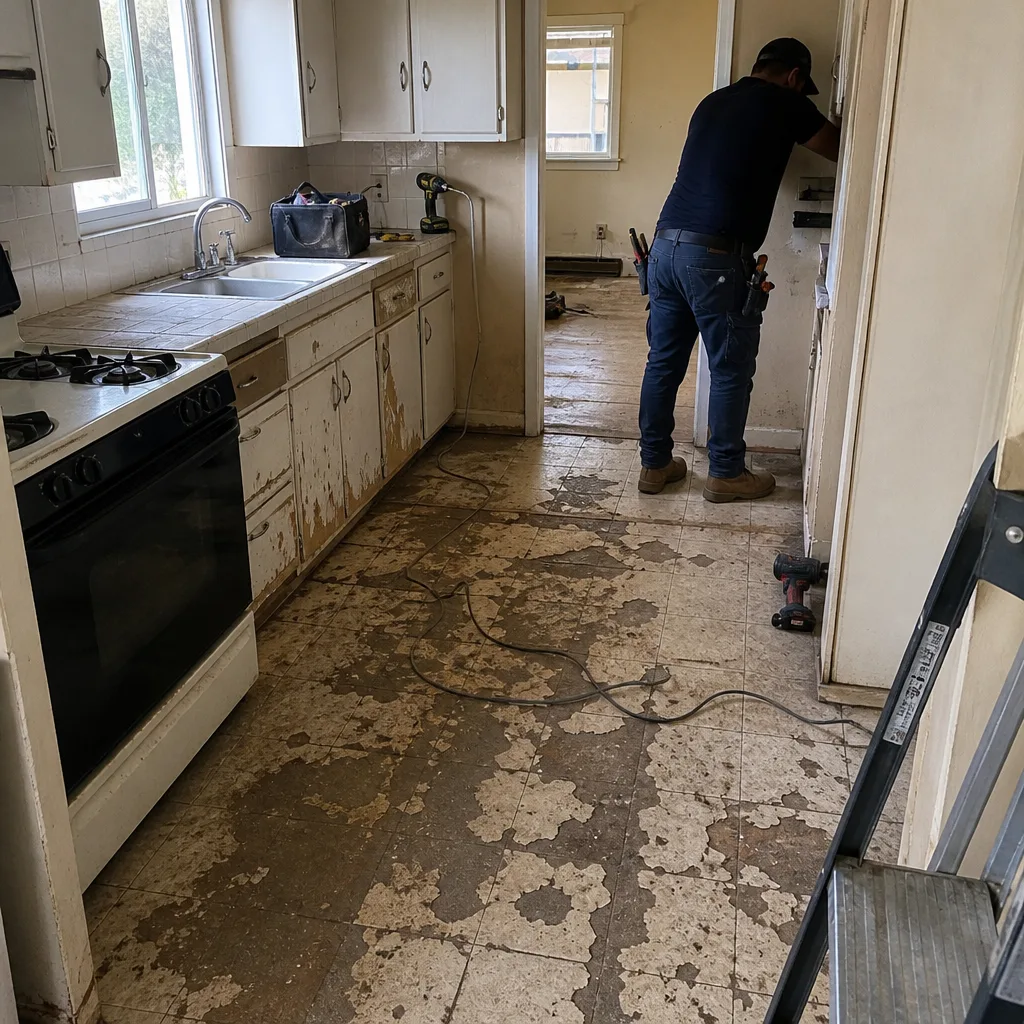 Before
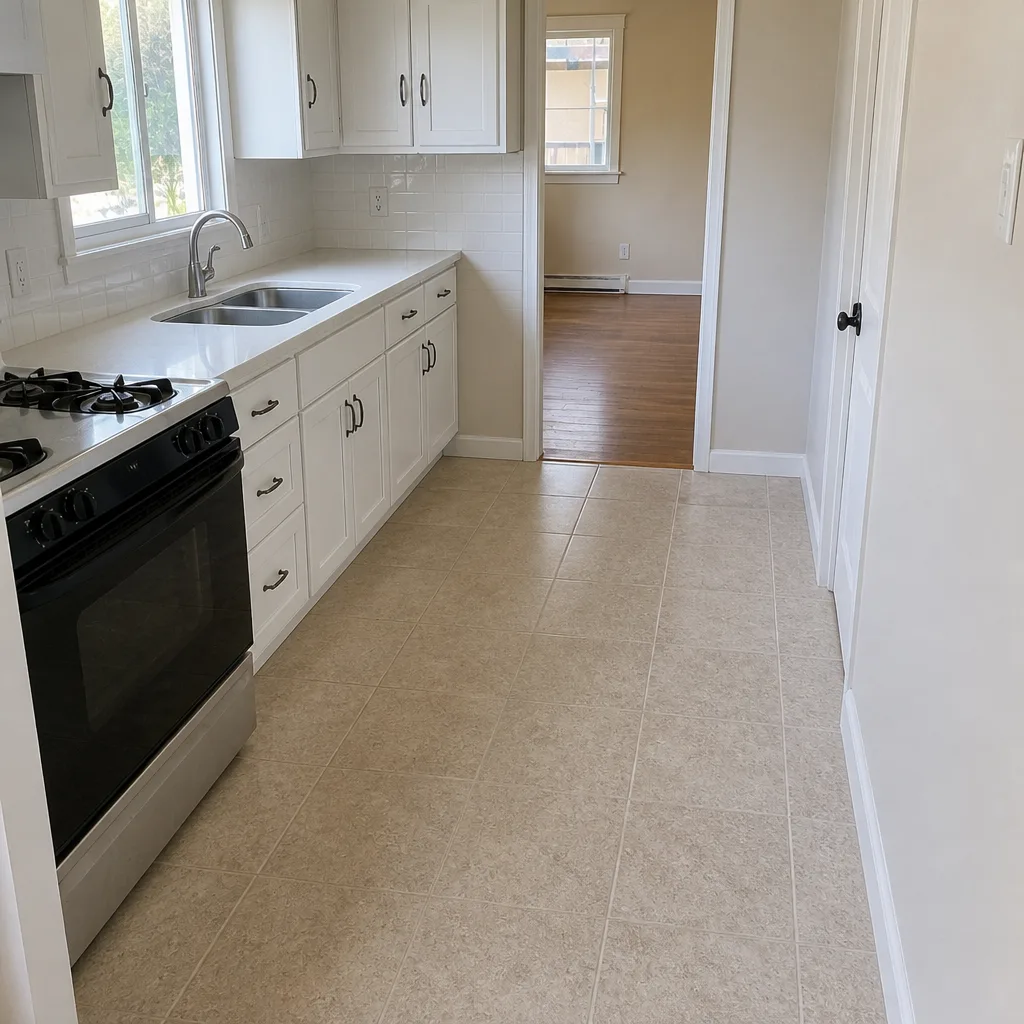 After
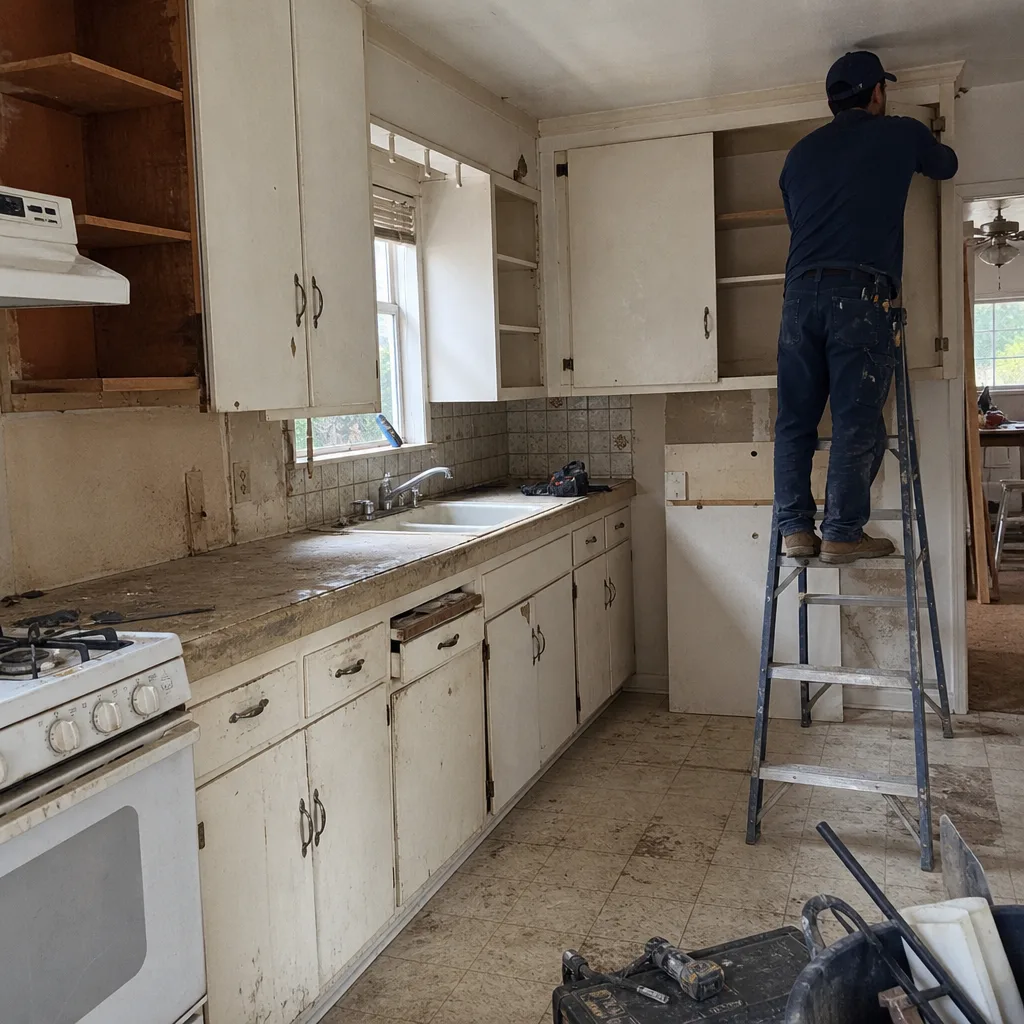 Before
 After
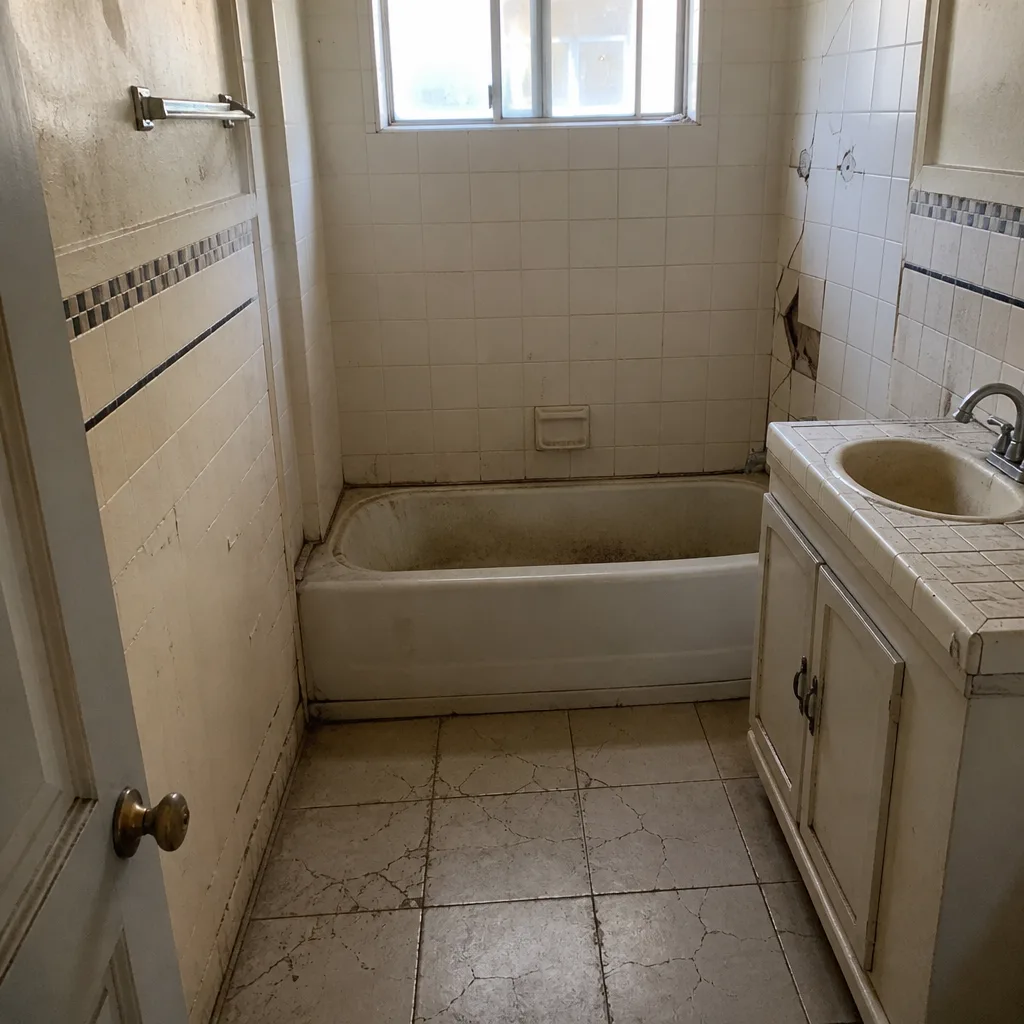 Before
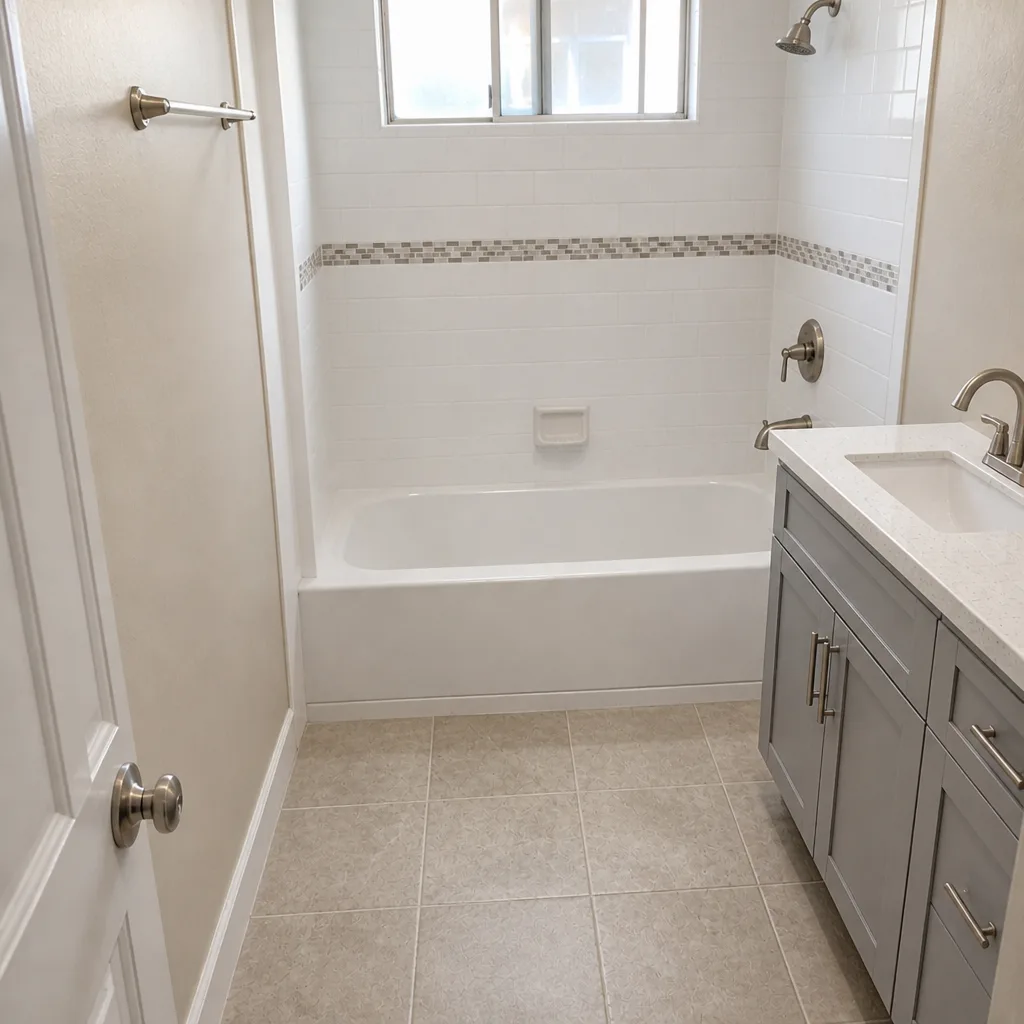 After
When to Call a Professional
Most of this guide is homeowner work: sealing, descaling, inspecting, re-caulking. Call a professional when water is getting somewhere it shouldn’t. Soft spots at the shower base, a spongy subfloor, a hollow sound when you press the tile, a ceiling stain below the bathroom, or a shower pan that won’t drain are all stop-and-call situations. So is a shower that needs re-tiling or a valve that won’t stop dripping despite a new cartridge. Barrett & Sons Construction Glendale offers free estimates in Glendale and the surrounding county, and every price change arrives as a written change order before work proceeds, so there’s no surprise invoice at the end. Call (844) 560-4526 to schedule your free estimate.
Frequently Asked Questions
Every 6 to 9 months in wet areas, and every 6 to 12 months elsewhere in a Glendale bathroom. The city’s hard water and dry heat both wear sealant faster than in cooler climates. Call (844) 560-4526 for a free estimate if you’d rather have a professional reseal and inspect the grout at the same time.
Every 6 to 12 months, and immediately any time you spot a gap, a pull-away at the corner, or dark spots behind clear caulk. Check the seams monthly with your finger; if the caulk has any give or grit, it’s time. Call (844) 560-4526 for a free estimate if the caulk is failing within the first 90 days of a new install.
A bathroom up to 100 square feet needs at least 50 CFM, and many mid-size remodels bump to 80 CFM. Glendale’s dry climate means you’re mostly clearing shower moisture, so a properly vented fan matters more than a bigger one. If you’re not sure yours is working, call (844) 560-4526 for a free estimate on a fan upgrade.
No, not without a written change order in your hands before the work proceeds. Every scope, allowance, and price change is documented in writing first. Call (844) 560-4526 for a free estimate; there’s no trip charge inside the county.
The promise covers workmanship and materials we installed for 90 days: caulk failure from install, drain problems, leaks, loose tile, and fan issues. After 90 days, grout sealing, caulk wear, and hard-water scale become routine upkeep. Call (844) 560-4526 if you’re unsure which side you’re on.
Yes. Natural stone like travertine or marble should be professionally resealed once a year in a Glendale bathroom, while glazed porcelain needs no sealing at all, only grout sealant every 6 to 12 months. Call (844) 560-4526 for a free estimate if you’re choosing materials and want to talk through the upkeep.
The Bottom Line
A bathroom remodel holds up for a decade when the maintenance is simple and done on schedule: check caulk monthly, reseal grout every 6 to 9 months in Glendale’s hard water and dry heat, descale fixtures every few weeks, clean the exhaust fan every quarter, and do one full inspection every year. The first 90 days belong to the workmanship promise; after that, the room belongs to your routine. Get the calendar on the cabinet door and follow it. If something looks like more than routine wear, call (844) 560-4526 for a free estimate and a second opinion on any written estimate.
Written by the team at Barrett & Sons Construction Glendale.